
Pick the wrong one and you can pay for it in safety exposure, emissions, maintenance hours, spare-parts inventory and plant uptime. This article compares ANSI/ASME B73.1 and API 610 by scope, construction, operating environment, lifecycle cost and selection criteria. It also looks at two real retrofit examples.
Key Takeaways
- ANSI/ASME B73.1 covers chemical-process pumps with standardized dimensions and interchangeability.
- API 610 targets petroleum, petrochemical and natural-gas services with stricter verification.
- API is not automatically better; duty, hazard and owner specification decide.
- Confirm the standard edition and compliance documents before substituting any pump.
ANSI vs API Pumps: Quick Comparison
Both standards govern centrifugal pumps. What they emphasize differs.
Scope and Standards
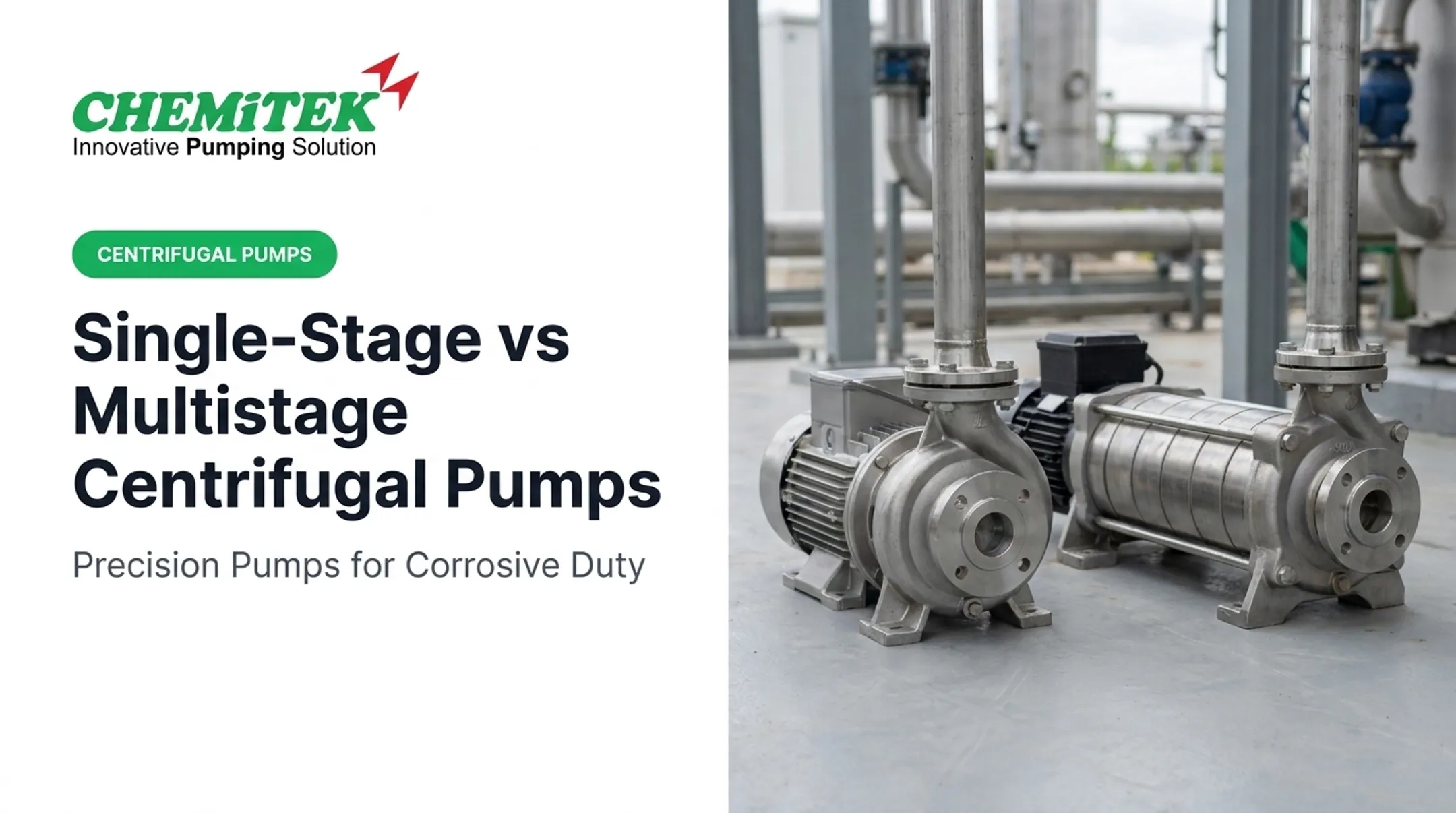
ASME B73.1 is titled Specification for Horizontal End Suction Centrifugal Pumps for Chemical Process. ASME's current listing is B73.1-2026. It covers metallic and solid-polymer, single-stage, end-suction pumps.
Pumps with the same dimensional designation share mounting dimensions, nozzle sizes and locations, shafts, baseplates and foundation-bolt holes. Internal parts and hydraulic performance are not guaranteed identical.
API 610 covers centrifugal pumps for petroleum, petrochemical and gas-industry process services. The 13th edition was released in 2026. It spans overhung, between-bearings and vertically suspended types, so compare a specific API type, not "API pumps" as one design.
A note on terminology: ANSI doesn't write pump standards. ASME does, and ANSI accredits it. "ANSI pump" is shorthand for a B73.1 pump.

Side-by-Side View
| Factor | ANSI/ASME B73.1 | API 610 |
|---|---|---|
| Typical services | Chemical, water treatment, general process | Refinery, petrochemical, natural gas |
| Core strength | Dimensional interchangeability | Verification, containment, documented compliance |
| Seals | Selectable, including API 682 options | API 682 seals required (12th ed.), category set by purchaser |
| Testing | Specified through purchase documents | Hydrostatic and performance testing defined in the standard |
| Mounting | Foot or centerline, depending on model | Varies by type (OH1 foot, OH2 centerline) |
| Typical initial cost | Generally lower | Generally higher |
Mounting isn't binary. Goulds' HT 3196 pairs B73.1 dimensional compliance with centerline mounting, so "all ANSI pumps are foot-mounted" is wrong.
Materials Are a Separate Question
Neither standard picks your metallurgy. B73.1 fixes geometry and dimensions; material choice depends on fluid chemistry, concentration, temperature, solids, viscosity and mechanical loads.
Arkema's guidance treats these as compatibility variables:
- Concentration
- Temperature
- Pressure
- Exposure time
- Cycling
- Abrasion
Evaluate materials under actual service conditions rather than generic charts alone.
What Are ANSI and API Pumps?
What Are ANSI Pumps?
An ANSI pump is a centrifugal pump built to ASME B73.1. The standardization pays off at replacement time. When a new pump genuinely meets the duty and interface dimensions, installation, maintenance, and procurement all get simpler. Spare parts, seals and complete units can come from different suppliers, which cuts inventory and speeds repairs.
Typical applications include:
- Chemical processing
- Water and wastewater treatment
- Pharmaceuticals and food processing
- Dyes and intermediates
- Fertilizer, sugar and steel plants
Corrosive service still demands correct wetted materials and seal selection. The standard doesn't supply them.
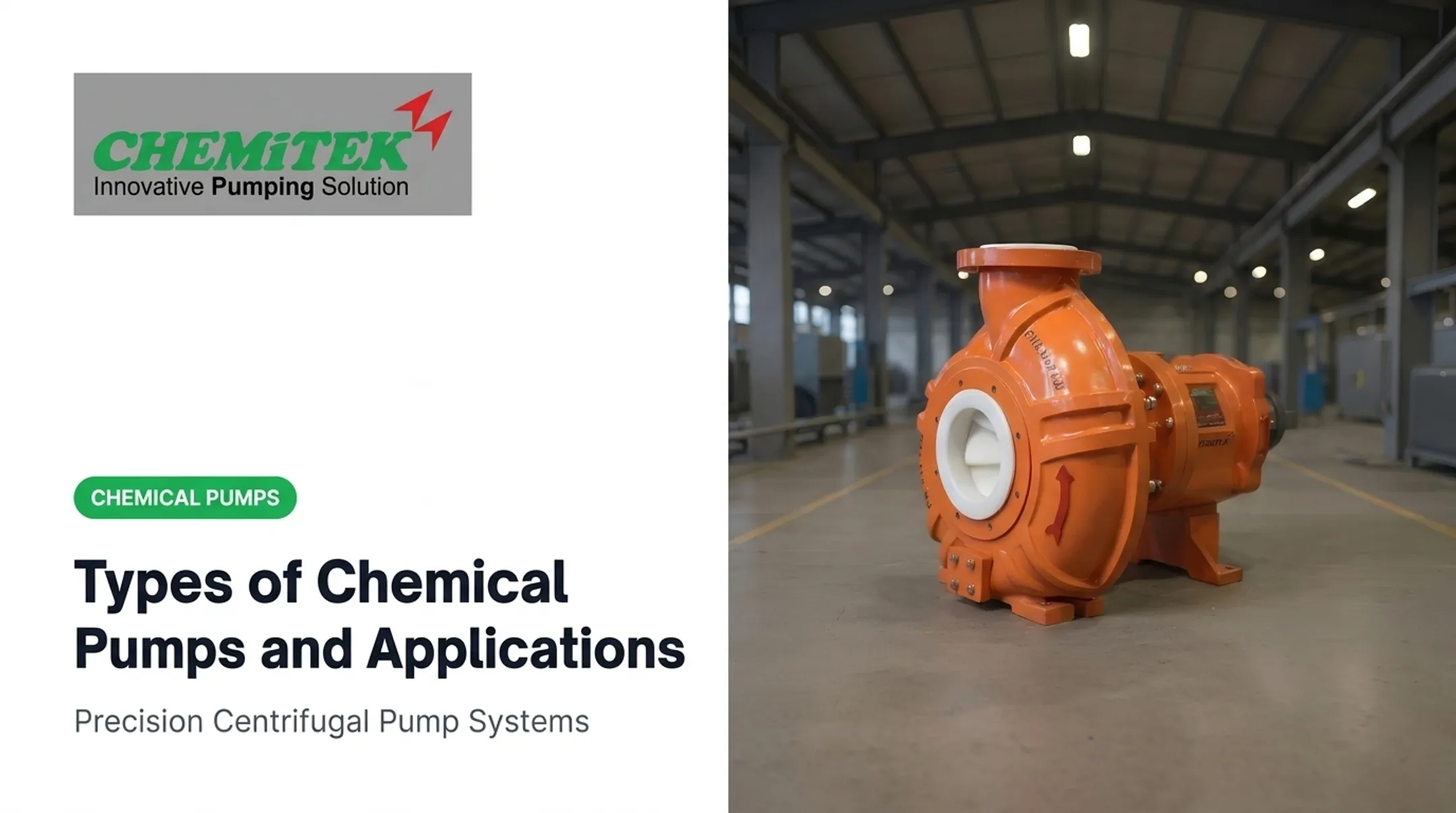
Chemitek builds ANSI/ASME B73.1-compliant process pumps in metallic and non-metallic constructions. Options include SS316, SS304, and super alloys, plus investment-cast titanium, Hastelloy, PVDF, and PFA components.
Non-metallic models run to 210°C (410°F), and metallic models to 350°C (662°F). Flow reaches 1,400 m³/hr (about 6,160 GPM). These are B73.1 designs, not API 610 pumps.
What Are API Pumps?
API stands for the American Petroleum Institute. API 610 is the centrifugal pump standard it publishes, which is the one people usually mean. The organization and the standard aren't the same thing.
API 610 puts heavy weight on mechanical robustness, containment, reliability, inspection, testing, and documentation. Failures in this world can involve hazardous fluids, severe conditions, and real environmental consequences. The 12th edition requires pressure-casing hydrostatic tests and performance testing, and mechanical seals complying with API 682.
Typical uses include:
- Refinery transfer
- Hydrocarbon processing
- Petrochemical production
API isn't the automatic answer for every corrosive, hot, or high-pressure duty. Hazard analysis, applicable codes, and engineering approval drive the final call.
ANSI vs API: What Is Better for Your Application?
Neither standard is universally better. Match the pump to the duty, the risk profile and the specification that governs your project. Work through these steps in order.
- Find the governing specification. Confirm whether the owner, EPC, insurer, regulator or licensor requires API 610, B73.1 or another named edition. Treat "API-style" as marketing, not a conformity category.
- Define the duty in detail. Record flow, head, suction pressure, temperature, speed, viscosity, solids, vapor pressure, corrosiveness, toxicity and flammability, plus the cost of a leak or unplanned shutdown.
- Compare mechanical requirements. Look at mounting, bearing housing and cooling, casing containment, wear rings, seal arrangement, and the inspection and documentation you need.
- Total the lifecycle cost. Don't stop at purchase price.
- Get engineering sign-off. A qualified pump engineer should approve any substitution.

Lifecycle Cost, Not Sticker Price
The Hydraulic Institute, Europump and US DOE lifecycle cost guide lists eight components:
- Purchase
- Installation and commissioning
- Energy
- Operating labor
- Maintenance and repair
- Downtime
- Environmental
- Decommissioning and disposal
ANSI pumps are generally cheaper to buy, and interchangeability helps parts availability. API equipment can justify higher acquisition and documentation costs where failure consequences are severe.
No fixed API price premium or universal temperature or pressure cutoff is industry-standard. Compare quotes with matched duty, materials, sealing, testing and documentation.
Situational Guidance
- Choose B73.1 when duty, materials, risk profile and project specification support it.
- Choose API 610 when service severity, hazard consequences, owner specification or reliability needs justify it.
- Don't assume that corrosive or hot service automatically forces API.
Some B73.1 designs handle severe conditions. Goulds' HT 3196 lists up to 700°F (372°C) and 450 psig as separate published maxima, with B73.1M dimensional compliance. Those maxima are not necessarily allowed at the same time, so confirm the manufacturer's documented limits.
Real-World Examples and Case Studies
Both cases below are supplier-reported. Neither is a controlled ANSI-versus-API comparison.
Chemical Service: ADM and a Goulds 3196 MTX
At an ADM renewable-chemical plant in North Carolina, a crystallizing sugar-type fluid caused at least three seal failures per year. The original setup used a single seal with no flush. AESSEAL's case study describes the fix: a pressurized dual seal and a water-management system.
The result was one year without failure and $15,000 in annual savings across production, maintenance and parts. The lesson: a B73.1 pump served this chemical duty well once the sealing was right. The gain came from the seal system, not from the standard.
API Service: Sulzer Condensate Pumps in Malaysia
An offshore Malaysian operator saw required flow fall from 93 to 46 m³/h (about 410 to 200 gpm). Running outside its preferred operating range caused vibration and seal leakage, with MTBF around 12 months. Sulzer redesigned the hydraulic cartridge for the new duty, kept the barrel, and states the result conforms to API 610.
Power dropped from 370 to 216 kW (about 495 to 290 hp), a 42% reduction. MTBF is estimated at 48 months, which is a projection, not completed operating history. Reported ROI was two years. The lesson: matching hydraulics to actual duty drove the savings.

Takeaway
The standard should follow application risk and project specification, not a blanket preference for the cheaper or more heavily engineered option.
If you're weighing a B73.1 pump for a corrosive duty, send Chemitek your flow, head, fluid, temperature, pressure and material requirements for application-focused guidance. You can reach the team at +91 98606 75823.
Conclusion
ANSI/ASME B73.1 and API 610 serve different design, risk, and project needs, so neither is universally superior. Interchangeability and cost control favor B73.1 in many chemical duties. Severe, high-consequence services often justify API 610's verification and containment rigor.
Before you buy:
- Review the full duty specification
- Confirm the standard edition
- Get compliance documents in writing
Tie the choice to safety, emissions, corrosion resistance, maintainability, and lifecycle cost.
Frequently Asked Questions
What are ANSI pumps?
ANSI pumps are centrifugal pumps built to ASME B73.1 for horizontal end-suction chemical-process service. Standardized dimensions support interchangeability in general process applications.
What are API pumps?
API pumps are designed and documented to American Petroleum Institute requirements, mainly API 610. That standard targets demanding petroleum, petrochemical, and natural gas services.
What is the difference between API pumps and non-API pumps?
API pumps carry documented requirements for design, inspection, testing and containment. Non-API does not mean unsuitable; B73.1 is an established chemical-process specification.
What is the difference between API and ANSI flanges?
Flange compatibility depends on the governing flange, pressure-rating and material standards, not the pump label. API 610 (12th edition) references ASME B16.5 and B16.47 Series B, not API 6A wellhead flanges. Check the datasheet.
How do I choose between an ANSI pump and an API 610 pump?
Start with the project specification, then fluid hazard, temperature, pressure, emissions risk, reliability needs and lifecycle cost. Have a qualified pump engineer review the choice.
Can an ANSI pump handle corrosive or high-temperature fluids?
Some B73.1 designs can, when materials, seals, cooling and limits are correctly selected. Lined and polymer constructions exist for corrosive duty. Always confirm the manufacturer's documented limits.