
Centrifugal pumps handle continuous liquid transfer in chemical, water treatment, pharmaceutical, steel, textile, sugar and fertilizer plants. Pumping systems made up 27% of US manufacturing motor-system electricity in DOE's 1994 baseline, so poor selection gets expensive.
This guide covers how these pumps work, the configurations available, what drives price, what to put in a quote request, and how to judge a supplier.
Key Takeaways
- Suitability depends on the duty point (flow and total head), not motor size or port diameter.
- Fluid chemistry, temperature, viscosity and solids set casing, impeller and seal materials.
- Compare suppliers on pump curves, standards, lifecycle cost, spares and engineering support.
- Corrosive, toxic, hot or abrasive liquids call for an application-specific quotation.
What Is a Centrifugal Pump and How Does It Work?
What a centrifugal pump does
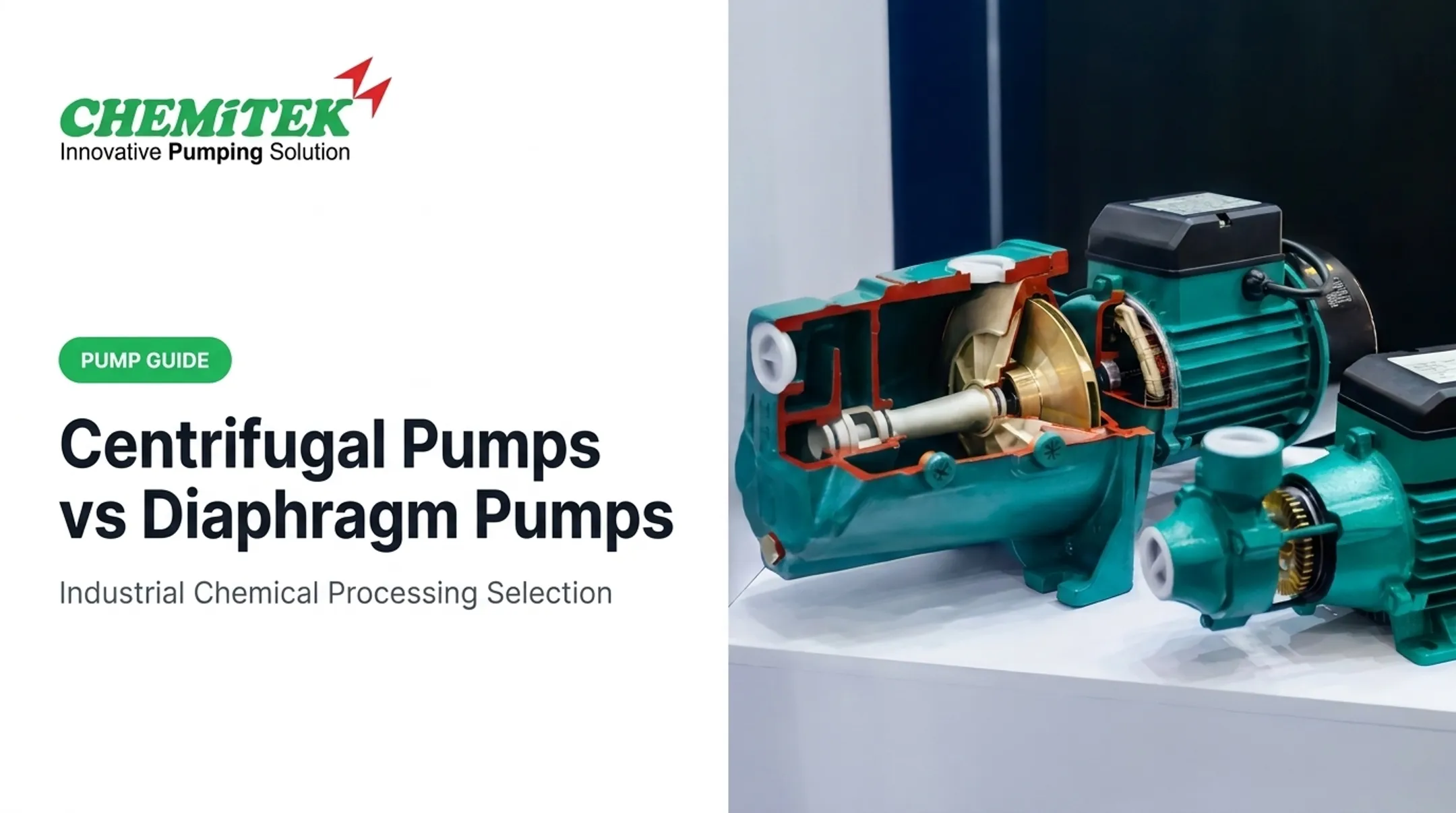
A centrifugal pump is a dynamic pump. A rotating impeller turns mechanical energy from a motor into fluid velocity and pressure.
The pump is only part of the system. The complete package may include a motor, baseplate, coupling, piping, valves, controls, seals, and instrumentation. System piping and valves create the resistance the pump works against.
How the pumping cycle works
- Liquid enters through the suction nozzle and reaches the impeller eye.
- The spinning impeller accelerates it outward.
- The volute (or a diffuser) slows the liquid and converts velocity into pressure.
- Liquid leaves through the discharge nozzle.

Most centrifugal pumps are not self-priming, so the casing must be filled with liquid before startup. Trapped air restricts flow and causes pressure pulsations. Self-priming designs exist, but they still cannot run dry.
The operating point is where the pump curve crosses the system curve. Use the manufacturer's certified curve, not a rule-of-thumb efficiency figure.
Main components
- Impeller: adds energy; open designs tolerate solids better
- Casing: collects flow and directs it to discharge
- Shaft and bearings: carry loads; affect vibration and service life
- Mechanical seal or packing: controls leakage along the shaft
- Wear components: protect the casing and impeller as clearances open up
Performance terms buyers should know
| Term | Meaning |
|---|---|
| Flow rate | Volume moved per unit time (gpm or m³/h) |
| Total dynamic head | Energy as an equivalent liquid-column height, including friction losses |
| NPSHa / NPSHr | Suction head the system provides versus the head the pump needs |
| BEP | Flow at maximum hydraulic efficiency |
| Specific gravity | Liquid density relative to water; affects power |
| Viscosity | Resistance to flow; higher values cut performance and raise power |
The Hydraulic Institute (HI) separates the best efficiency point from broader preferred and allowable operating regions, so check the manufacturer's limits.
Types of Centrifugal Pumps to Consider
Flow direction and pressure
- Radial flow: higher head, lower flow
- Mixed flow: intermediate duties
- Axial flow: higher flow, lower head
These labels are a starting point. Final selection comes from duty data.
Stages and orientation
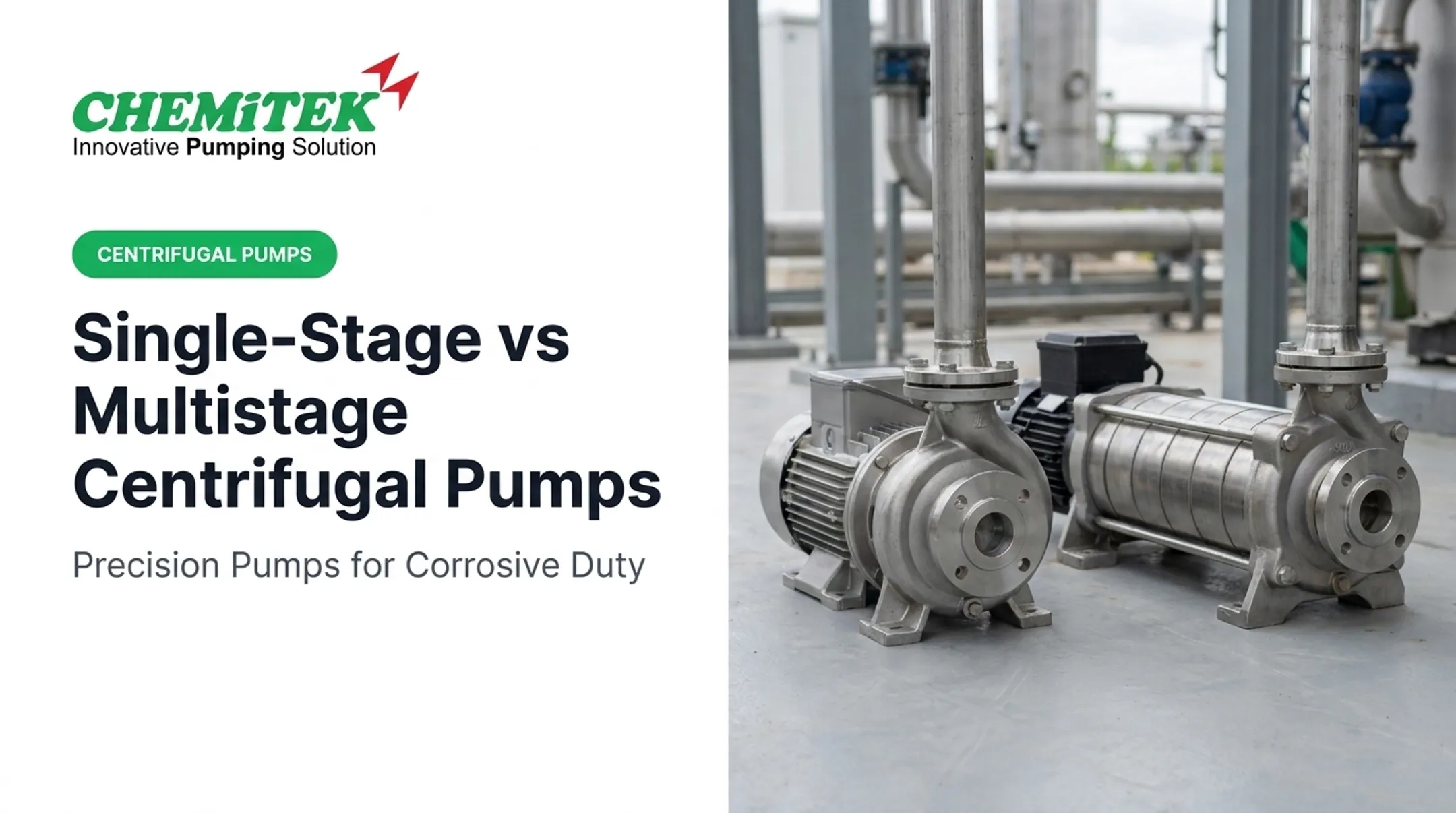
Multistage pumps stack impellers so stage heads add in series. Single-stage units suit moderate head.
Horizontal and vertical describe shaft orientation only, not hydraulic performance. Horizontal mounting generally eases alignment, access, and maintenance; vertical layouts save floor space.
Common industrial configurations
- End-suction: compact, for clean to moderately dirty liquids with good suction conditions
- Split-case: casing joint along the shaft centerline
- Vertical inline: nozzles in line with piping
- Vertical sump: for tank and pit service
- Self-priming: evacuates suction-line air without external priming
- Submersible: pump and motor both immersed
Suction lift, solids, tank depth, redundancy and maintenance access should guide the choice.
Materials, seals and construction
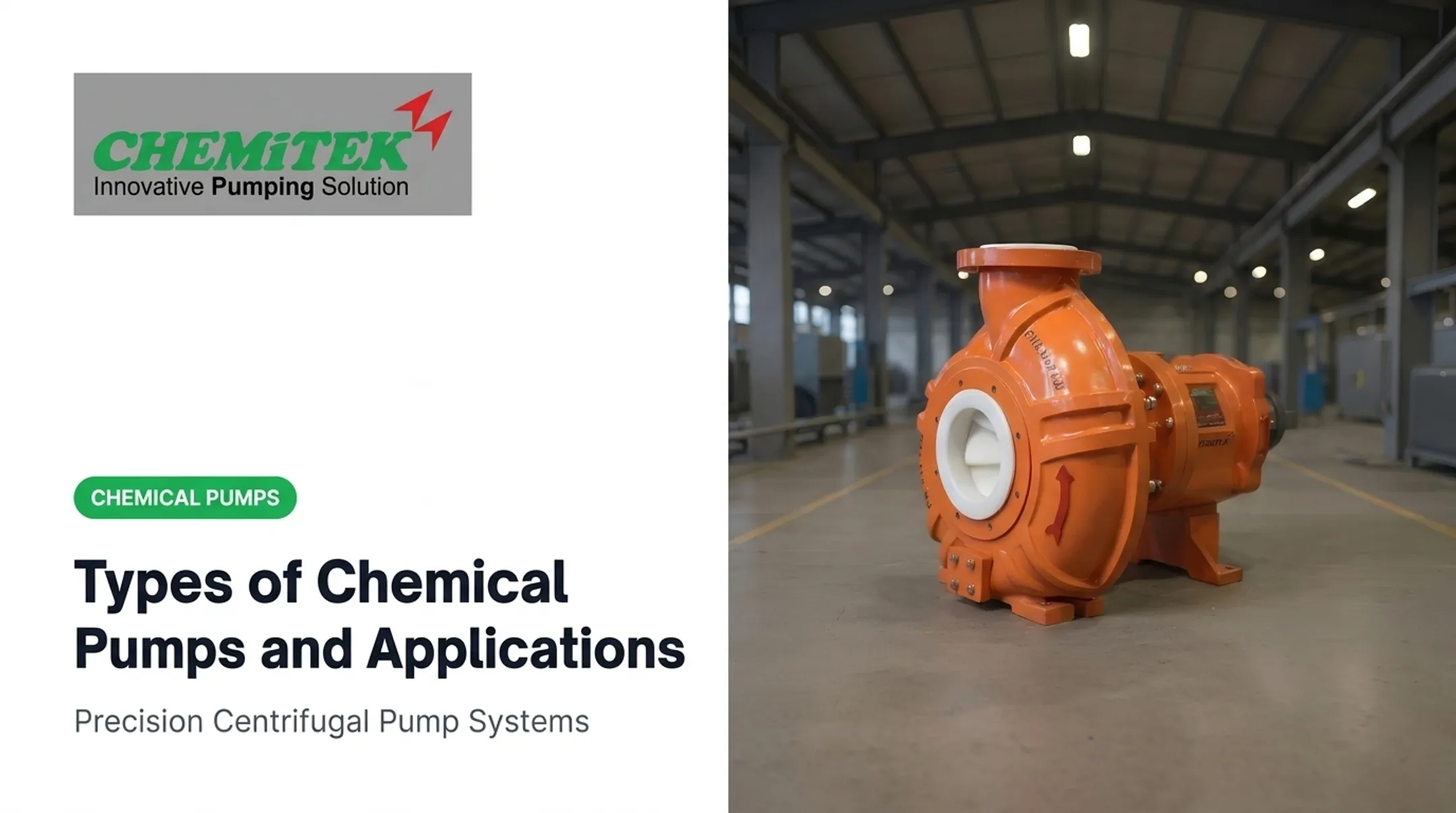
Match metallic, lined, or polymer construction to chemical compatibility, temperature, pressure, and abrasion. Temperature limits are product-specific.
Finish Thompson's DB manual lists 180°F for polypropylene and 220°F for PVDF in one sealless pump. A material's limit never equals the assembled pump's limit.

Mechanical seals use a thin fluid film between faces to control leakage. Magnetic-drive designs remove the conventional shaft seal. For toxic or hazardous fluids, specify leakage-control requirements up front.
Standards and interchangeability
- ASME B73.1: horizontal end-suction, single-stage chemical-process pumps with dimensional interchangeability
- ASME B73.3: the sealless counterpart
- API 610 / ISO 13709: petroleum, petrochemical and gas-process services
- API 682: shaft-sealing systems
Confirm the exact standard, testing documentation and certifications in your project specification. One designation does not cover every attribute.
How to Choose a Centrifugal Pump for Sale
Start with the duty point
Document required flow, total head or discharge pressure, suction conditions, operating hours and expected demand swings. Where the process varies, give normal, minimum and maximum conditions so the manufacturer can assess operating margin.
Select materials for the liquid
Provide the fluid name, concentration, pH, specific gravity, viscosity, temperature, vapor pressure, toxicity, flammability and solids or crystal content. Casing, impeller, sleeve, gasket and seal materials each need checking. Generic "metal versus plastic" comparisons are not enough.
Check suction and cavitation
NPSHa must exceed NPSHr, and HI guidance sets application-specific margin rather than one universal number. Review liquid level, tank pressure, pipe friction, temperature and possible air ingress.
Cavitation shows up as noise, vibration, unstable flow and impeller damage. Call for an engineering review rather than tweaking valves.
Match the pump to motor and system
Cover motor power, voltage, frequency, speed control, coupling, baseplate, rotation, starting method and controls. In classified areas, OSHA 1910.307 requires equipment suitable for the specific location classification.
Oversizing pushes the pump off its BEP and raises energy use, recirculation and wear. Undersizing never reaches the duty.
Evaluate price and lifecycle cost
Price reflects size, capacity, head, materials, seals, motor, standards, testing, controls, accessories and customization. Lifecycle cost adds energy, maintenance, spares, downtime and refurbishment. The DOE/HI/Europump guide notes energy can dominate above roughly 2,000 operating hours per year.

Because costs swing this widely, a detailed quotation built on verified duty data beats any published range.
What to include in a request for quotation
- Fluid data: name, concentration, pH, specific gravity, viscosity, solids
- Flow and head (normal, minimum, maximum)
- Temperature and pressure
- Suction arrangement and piping details
- Installation orientation
- Motor and electrical requirements
- Applicable standards and documentation
- Delivery expectations and spare-parts needs
Chemitek builds custom-designed horizontal centrifugal process pumps for corrosive acids, alkalis and toxic liquids. Its designs are ANSI/ASME B73.1-compliant, with investment-cast wetted parts, heavy-duty power frames and four polymer options. The NM Series non-metallic line lists flow up to 1,400 m³/hr and 210°C, with metallic pumps rated to 350°C.
Chemitek's engineers confirm final material selection, sizing, temperature limits and performance for each application. The company serves global markets from India, including customers in the US.
Applications, Benefits, and Limitations
Where centrifugal pumps are used
- Chemical, fluorochemical and specialty chemical processing
- Fertilizer acid handling
- Pharmaceutical solvents and acids
- Water and wastewater treatment
- Steel pickling and acid regeneration
- Textile dye liquors
- Sugar fermentation and distillation
Design shifts with the liquid. Clean water allows standard builds. Corrosive chemicals need lined or polymer wetted parts. Abrasive suspensions and solids call for open impellers and wear protection. Application labels never prove interchangeability.
Benefits
- Continuous, relatively smooth flow
- Broad capacity range
- Simple operating principle
- Easy maintenance on well-designed frames
- Good fit for low- to moderate-viscosity liquids
Lower downtime depends on correct sizing, compatible materials, adequate suction, proper sealing, alignment, lubrication and preventive inspection. No pump delivers savings automatically.
Limitations and operating risks
The U.S. Department of Energy (DOE) notes that positive-displacement pumps often suit high-viscosity, low-flow, high-head duties. Centrifugal designs struggle with very viscous fluids, heavy solids and trapped gas.
Watch for these failure modes:
- Priming loss and dry running
- Cavitation
- Deadheading (blocked discharge)
- Low-flow overheating and internal recirculation
- Seal failure and corrosion
- Impeller wear and motor overload
Follow the manufacturer's installation and operating instructions, including stated minimum flow.
Conclusion
The best centrifugal pump for sale is the one engineered around your actual duty point, fluid properties, materials, installation, standards, and lifecycle needs.
To evaluate a pump for your process, send Chemitek complete process data by email at info@chemitek.co.in or call +91 98606 75823. Custom quote requests receive engineering review and a tailored response within 24 hours.
Frequently Asked Questions
How much does a centrifugal pump cost?
Cost varies with flow, head, materials, motor, seals, standards, customization, testing and accessories. An accurate price needs application and duty-point data.
What factors determine centrifugal pump price?
Pump size, wetted materials, fluid properties, pressure and temperature, motor requirements, compliance documents and customization all matter. Lifecycle energy and maintenance should be weighed beside the quote.
How do I identify a centrifugal pump?
Look for a rotating impeller inside a casing, with a suction inlet, discharge outlet, shaft, driver, bearings and sealing arrangement. Confirm model, size and serial number from the nameplate and manufacturer documentation.
What is a centrifugal pump used for?
It handles continuous transfer, circulation, boosting, cooling, water treatment and industrial process duties. It suits compatible low- to moderate-viscosity liquids.
Which centrifugal water pump is the best?
No model wins universally. Selection depends on flow, head, water quality, suction conditions, solids, temperature, installation, motor and operating schedule.
What is the difference between a pump and a centrifugal pump?
"Pump" is the broad category. A centrifugal pump is one dynamic type that uses a rotating impeller to add velocity and pressure to liquid.