
The numbers show why. Corbion reports viscosity of 5-60 cP at 20 °C across 50-90% solutions, so concentration alone doesn't define the duty.
Lactic acid pumps are industrial machines used for transfer, circulation, dosing, concentration support and storage operations. This article covers process duties, fluid and hydraulic data, pump types, materials, installation, procurement and how Chemitek approaches these applications.
Key Takeaways
- Specify the full process fluid and operating envelope, not the chemical name alone.
- Confirm compatibility for every wetted part, including seals, elastomers and gaskets.
- Match pump type to duty: transfer, circulation, dosing, viscous service, solids or vacuum support.
- Get curves, drawings and model-specific limits before issuing a purchase order.
Lactic Acid Processing and Common Pump Duties
Pumps appear at nearly every stage of a lactic acid plant:
- Fermentation broth handling
- Clarification or filtration
- Neutralization
- Concentration by evaporation
- Tank circulation
- Finished-product transfer and loading
Stream character changes along the line. Broth may carry biomass or suspended solids. Calcium-based routes generate gypsum after acidification, while Cargill's low-pH yeast process produces substantially less. Later streams are cleaner but may be more concentrated and more viscous.
Process Pumps vs. Vacuum Equipment
Liquid-ring vacuum pumps support evaporator vacuum service by evacuating saturated gases and vapors. They don't move acid liquid. Select each pump for its own duty, not for the production line as a whole.
One Plant, Several Pump Roles
A single facility often needs separate pumps for:
- Continuous circulation
- High-flow transfer
- Metered dosing
- Viscous-product movement
- Intermittent or solids-bearing service
Pump Requirements for Lactic Acid Service
Document the Fluid
Record the complete composition:
- Lactic acid concentration and water content
- Salts, solvents and fermentation residues
- Additives, cleaning chemicals and expected contaminants
Then capture minimum, normal and maximum values for:
- Temperature, viscosity and density
- Vapor pressure
- Flow rate and discharge pressure
- Operating hours, and batch or continuous duty
Published product data shows the range. One 80% lactic acid grade lists 18.4 mPa·s at 25 °C and vapor pressure of 0.0038 kPa at 20 °C. Treat those figures as reference points, not a full property curve. Use viscosity at the lowest anticipated pumping temperature.

Flow, Head and the Operating Point
Total dynamic head combines static lift with friction in pipe, valves, filters, heat exchangers and control valves. Friction losses rise roughly with the square of flow.
The system curve decides where the pump actually runs. A pump rated 100 gpm at 100 ft only operates there if your system needs 100 ft at 100 gpm. Higher viscosity can cut flow, head and efficiency while raising power draw. Request viscosity-corrected performance under ANSI/HI 9.6.7.
Suction Conditions and NPSH
NPSH available is a system characteristic. NPSH required comes from the manufacturer. Keep both in the specification and maintain the required margin.
Check these suction-side factors:
- Tank level variation
- Suction-pipe losses
- Liquid temperature and vapor pressure
- Priming requirements
Cavitation begins when inlet pressure falls below vapor pressure. It brings pitting, vibration and lost efficiency.
Solids, Crystals, Biomass and Gas
Solids and entrained gas affect impeller style, clearances, filtration and shear exposure. An open or solids-tolerant configuration may be needed, but only where the manufacturer confirms it for your fluid. No single solids or gas limit applies to every fluid.
Seal Leakage and Containment
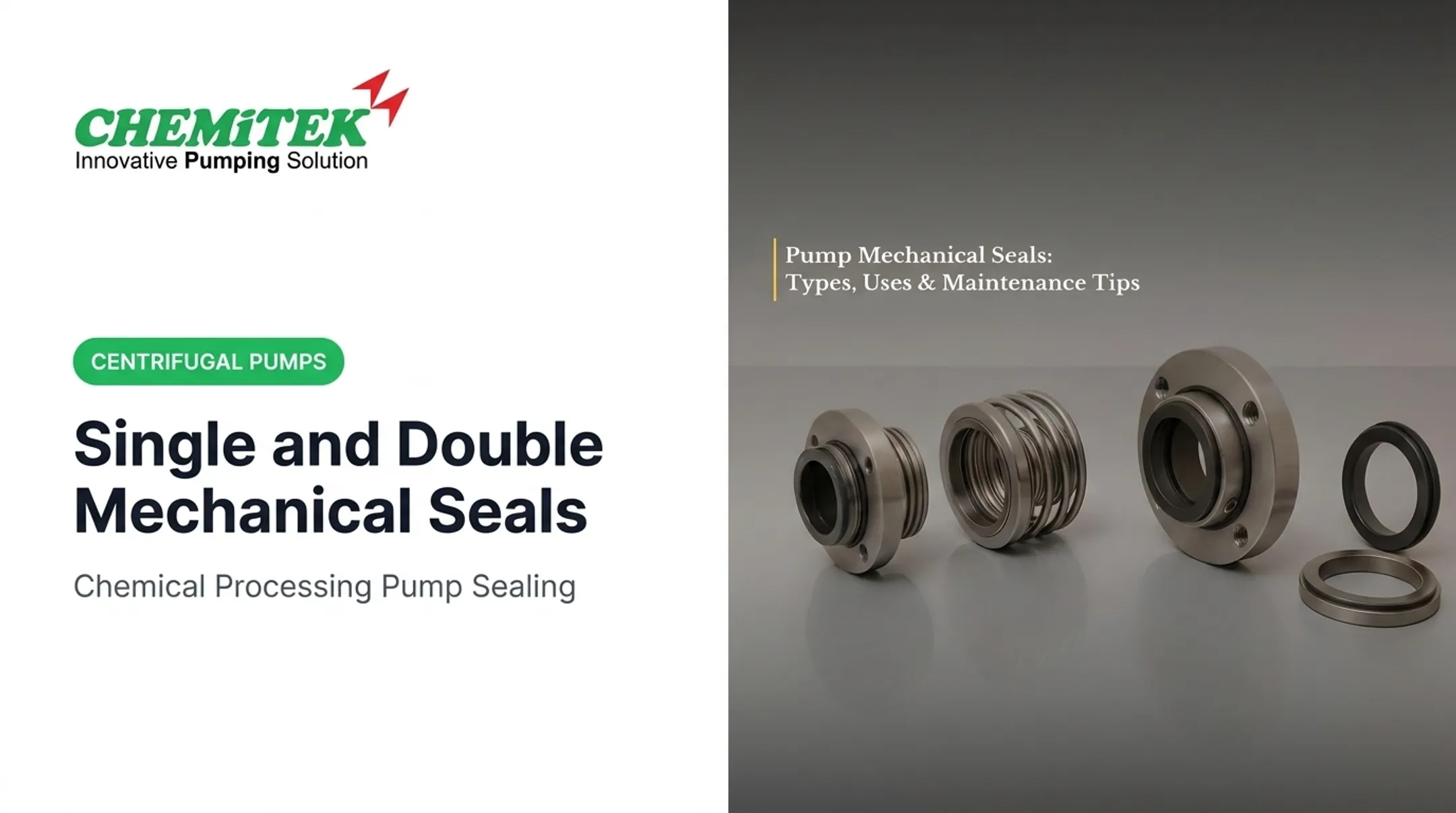
Treat sealing as its own design question. Review seal faces, elastomers, flush or barrier arrangements, secondary containment and dry-run protection.
- API Plan 11 recirculates process fluid to the seal chamber.
- Plan 52 uses an unpressurized buffer.
- Plan 53 uses a pressurized barrier.
- Plan 32 injects clean external flush that migrates into the process, so dilution must be acceptable.
Choosing Pump Types and Wetted Materials
Pump Type Comparison
| Type | Best fit | Watch for |
|---|---|---|
| Horizontal centrifugal | Continuous transfer and circulation | Viscosity derating, solids |
| Rotary positive-displacement | Higher viscosity, lower flow at higher pressure | Relief protection, cleanability |
| Diaphragm / metering | Controlled dosing, leakage control | Pulsation, dampeners |
| Sealless magnetic-drive | Zero-leakage needs | Not automatically solids-tolerant |
| Liquid-ring vacuum | Evaporator vacuum support | Not for liquid transfer |
A horizontal centrifugal pump suits continuous transfer or circulation when it runs near its efficient range on the actual system curve. Confirm that curve first.
Positive-displacement designs handle higher viscosity and controlled dosing, but review pulsation, relief protection, and cleanability. Diaphragm pumps suit dosing, leakage control, and intermittent service where solids may be present. Sealless magnetic-drive units address zero-leakage needs, though they are not automatically solids-tolerant. Weigh maintenance, efficiency, and material compatibility before you lock the type.
Wetted Materials: Match the Conditions
Published results only apply to the conditions tested:
| Material | Conditions | Result |
|---|---|---|
| PVDF | Aqueous or pure acid | Max 65 °C per Arkema |
| PP | 90%, 20 °C | Resistant |
| PTFE/FEP | 90%, 20 °C | Resistant |
| PFA | 90%, 20-100 °C | Resistant |
| EPDM / FKM | ≤28%, 20 °C | High resistance |
| 316L | 50%, 20-70 °C | <0.1 mm/year |
PVDF carries a continuous-use rating of 150 °C for select grades, yet the lactic acid chemical chart lists 65 °C. Don't substitute thermal ratings for chemical-service limits.

A compatible casing doesn't prove a compatible pump. Review each wetted part separately:
- Casing and impeller
- Shaft components and liners
- Gaskets, O-rings, and seal parts
- Auxiliary piping
Then ask the supplier to confirm the complete wetted assembly.
Sizing, Installation and Maintenance Checklist
RFQ Checklist
Include:
- Chemical name and concentration
- Temperature range, viscosity, density and vapor pressure
- Flow, head and suction conditions
- Solids size and content
- Duty cycle
- Motor and electrical requirements
- Connection sizes and installation arrangement
- Applicable standards and documentation needs
Installation Safeguards
- Support piping so it doesn't load the nozzles
- Align pump and driver
- Size suction piping adequately and keep it free of air pockets
- Fit isolation valves
- Prime before start; dry running damages pumps
- Add pressure and flow instrumentation, dry-run protection and leak containment
- Leave room for seal and bearing service
Operating and Maintenance Plan
Track these operating signals:
- Vibration, noise and temperature
- Flow, pressure and power draw
- Seal condition
Watch for cavitation. ANSI/HI 9.6.5 covers condition monitoring. Plan spares for seals, bearings, gaskets and wetted parts based on the confirmed model.
Documents to Request Before Purchase
- Pump curve
- General arrangement drawing
- Material details and seal specification
- Inspection records
- Model-specific operating limits
Chemitek's Lactic Acid Pump Approach
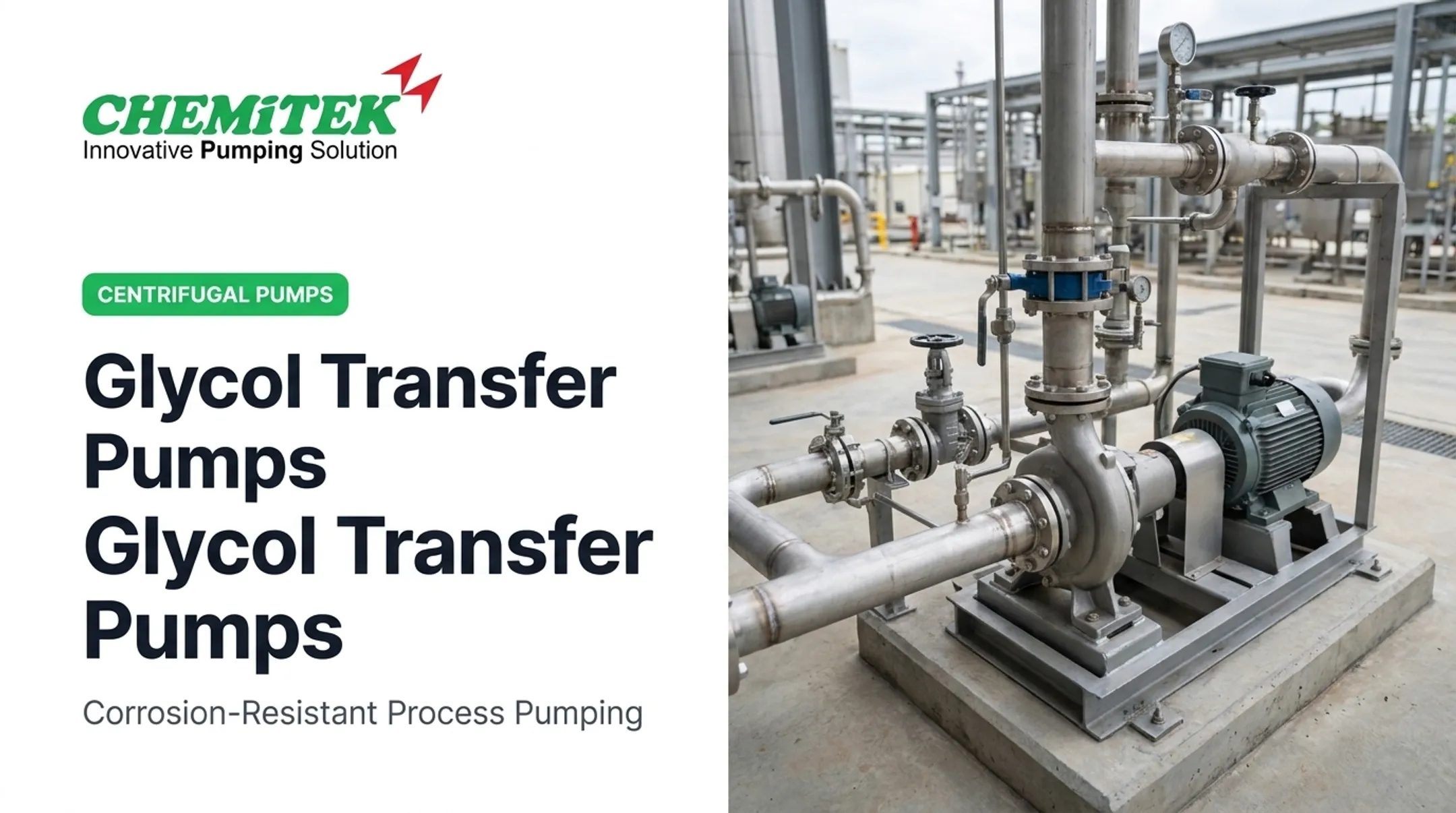
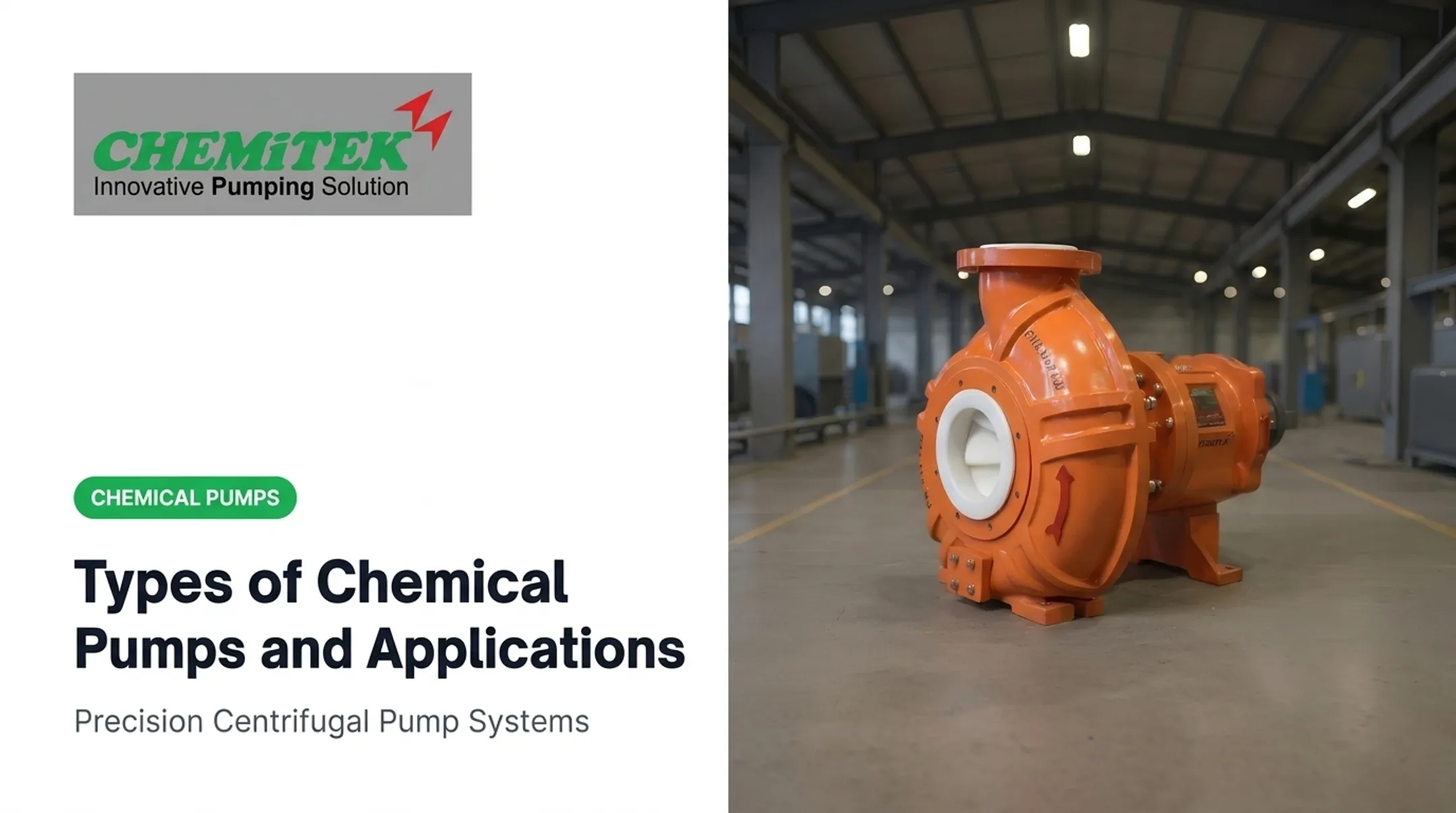
Chemitek is an industrial pump manufacturer, founded in 2009, offering custom-designed horizontal centrifugal process pumps for corrosive fluids in chemical and specialty-process sectors.
For lactic acid service, non-metallic and PVDF options are available after the full operating envelope and wetted-component compatibility are reviewed and approved. Confirm lactic-acid-specific elastomer and gasket data with Chemitek's engineers.
Design Features, Where They Fit
- TruTrapezoid™ volute casing with open impeller, for solids-bearing duty
- PolyCart™ mechanical seal, which runs without water cooling
- PolyPrime™ priming pot for self-priming operation
- PolyGrif™ armored components for structural strength at temperature
- Heavy-duty power frames
Custom-Engineering Process
- Review the fluid data
- Establish the hydraulic duty
- Select casing and wetted materials
- Confirm the seal arrangement
- Check suction conditions
- Provide applicable performance and quality documentation

Chemitek holds ISO 9001:2015, ISO 14001:2015 and ISO 45001:2018 certifications. Its designs follow ANSI/ASME B73.1. The NM Series lists flows up to about 6,160 GPM (1,400 m³/hr) and temperatures up to 410°F (210°C). Verify the exact model, operating limits, and documentation for your application before relying on those figures.
Request a quote: send your lactic acid concentration, temperature, viscosity, flow, head, suction conditions, solids, operating cycle and connection details. Chemitek will review the application and recommend a documented configuration.
Frequently Asked Questions
Does your liver clear lactate?
Yes, the liver is the main organ that processes lactate, with the kidneys also contributing. That is body physiology, not industrial lactic acid transfer or pump selection.
What does lactic acid do for your muscles?
Exercise-related lactate serves as metabolic fuel in the body. Industrial lactic acid service is different: corrosion, seals, flow and containment drive pump choice.
What type of pump is best for lactic acid?
It depends on flow, head, viscosity, solids, suction conditions, dosing accuracy and containment. A properly specified horizontal centrifugal pump may suit continuous transfer or circulation.
Are PVDF pumps suitable for lactic acid?
Yes for many duties, when concentration, temperature and contaminants stay within material limits. Confirm seals, elastomers and the full wetted assembly for your service.
What information is needed to select a lactic acid pump?
Share concentration, temperature, viscosity, density, flow, head and suction conditions. Include solids, duty cycle, materials, seals, installation details and any required documentation.