
Introduction
Pumping glycol is not the same as pumping water. Glycol type, concentration, temperature, viscosity, specific gravity, and additives all change how a pump performs.
Dow lists a 50 vol% propylene glycol solution at 10.65 cP at 50°F, several times the viscosity of water. A water-based pump curve will not predict that performance.
This guide is for engineers and maintenance teams moving glycol between tanks, drums, process vessels, heat-transfer systems, and closed-loop equipment. It walks through the selection process:
- Define the duty
- Choose the pump type
- Verify materials and seals
- Check NPSH and curve corrections
- Commission the system safely
Key Takeaways
- Size the pump on actual glycol composition, concentration, temperature, and suction conditions, not water assumptions.
- Centrifugal pumps suit many low-viscosity transfers; other designs fit metering, high viscosity, or self-priming needs.
- Confirm wetted-part, elastomer, and seal compatibility with the exact additive package.
- Priming, air removal, containment, concentration checks, and seal inspections keep systems reliable.
Glycol Transfer Pump Fundamentals
What Is a Glycol Transfer Pump?
A glycol transfer pump moves glycol or a glycol solution from one vessel or system to another. That differs from continuous circulation, precise dosing, and pressure boosting, though one pump can sometimes cover more than one role.
The flow path is simple: source tank, pump suction, pump, discharge piping, receiving vessel or process system. Most problems start on the suction side of that path.
Glycol Types and Applications
- Ethylene glycol (EG/MEG): EG and MEG are the same chemical (CAS 107-21-1). Used in resin intermediates, deicing, and heat-transfer fluids. A BASF industrial-grade SDS classifies it as harmful if swallowed.
- Propylene glycol (PG): common in secondary heating and cooling, freeze protection, and deicing. Hazard classification is product-specific, so check the SDS.
- Triethylene glycol (TEG): used in resins, plasticizers, lubricants, solvents, and heat-transfer fluids. A KOST USA SDS lists skin and eye irritation.
Common transfer applications include:
- Process cooling and heat-transfer loops
- Antifreeze and deicing
- Chemical manufacturing
- Maintenance and makeup operations
Pure EG freezes at about 9°F. Inhibited products add corrosion protection, so the base-glycol name alone doesn't define the service.
How Glycol Behaves Differently From Water
Higher viscosity and specific gravity raise friction losses, increase motor power, reduce flow, and shift the operating point. Hydraulic Institute guidance notes that rising viscosity cuts centrifugal flow, head, and efficiency while raising power and starting torque.
Published Dow data for inhibited fluids shows how much temperature and concentration matter:
| Fluid / concentration | Temp (°F) | Viscosity (cP) | Density (lb/ft³) |
|---|---|---|---|
| SR-1 / 30 vol% EG | 50 | 2.95 | 65.54 |
| SR-1 / 50 vol% EG | 50 | 5.51 | 67.34 |
| SR-1 / 50 vol% EG | 104 | 2.26 | 66.48 |
| DOWFROST / 50 vol% PG | 50 | 10.65 | 65.50 |
| DOWFROST / 50 vol% PG | 104 | 3.11 | 64.44 |

PG and EG are not interchangeable hydraulic inputs. Pull viscosity, density, and vapor pressure from your fluid manufacturer's current data sheet at your actual temperature.
Common Pump Types for Glycol
| Type | Fits | Watch for |
|---|---|---|
| Centrifugal | High flow, low-viscosity transfer | Needs viscosity correction; can't self-prime |
| Rotary positive displacement | Higher viscosity, steady flow | Requires overpressure relief |
| Self-priming centrifugal | Suction lift, above-tank mounting | Published lift is for cold water; not dry-run proof |
| Magnetic-drive | Leak-sensitive duty | Dry running depends on bushing design |
| Air-operated diaphragm | Low flow, sealless, intermittent | Confirm wetted materials for the blend |
Self-priming and magnetic drive are separate attributes, and one centrifugal pump can have both. Model limits matter more than type labels.
Choosing the Right Glycol Transfer Pump
Gather the Required Duty Information
Build the specification before talking to any supplier:
- Glycol type, concentration, inhibitor package
- Temperature range, including startup and upset conditions
- Viscosity and specific gravity at those temperatures
- Flow rate, total dynamic head, discharge pressure
- Flooded suction or suction lift; tank dimensions; piping length and elevation change
- Operating hours and transfer frequency; continuous or intermittent
- Solids or contamination risk, power supply, hazardous-area rating
Read the Pump Curve Correctly
Centrifugal pumps are normally tested on clear water. Viscous fluids need correction under ANSI/HI 9.6.7, using the manufacturer's approved data. Don't invent correction multipliers.
Check the corrected duty point, efficiency, motor power, shutoff head, and minimum continuous flow. Avoid selecting at the extreme end of the curve. ANSI/HI 9.6.3 defines a preferred operating region around the best efficiency point, and the allowable range depends on the specific pump.
Check NPSH and Suction Conditions
Available NPSH must exceed required NPSH with application-specific margin. HI's 2024 NPSH guideline points out that NPSH3 already represents a 3% head loss, so it is not a cavitation-free point.
Poor suction causes cavitation, vibration, noise, reduced flow, and early damage. To protect suction:
- Keep suction pipe short, straight, and generously sized
- Maintain adequate tank level
- Use low-restriction strainers and fully open valves
- Eliminate air leaks and air pockets
- Account for vapor pressure rising with temperature (50 vol% EG reaches 9.0 psia at 200°F)

Never throttle the suction to control capacity.
Match the Pump Type to the Duty
A centrifugal pump is practical for bulk transfer or circulation of relatively low-viscosity glycol when flow, head, and suction conditions suit it. Its efficiency drops at low flow, and it handles high viscosity less well than positive-displacement designs.
Consider positive-displacement or other designs when you need:
- Controlled dosing
- Thicker mixtures
- Low flow at higher pressure
- Self-priming capability
- Minimal leakage
Viking, for example, lists rotary models for glycol transfer, blending, and metering.
Motor, Speed, and Control Selection
Higher density or viscosity than expected is a known cause of motor overload. Size the motor from the corrected duty point with appropriate margin; no universal oversizing percentage applies. Pair that choice with the right start method and protection:
- Soft starters ramp acceleration; VFDs also control speed continuously
- Rotary positive-displacement pumps need a relief valve, since a blocked discharge can exceed ratings fast
- Avoid prolonged deadhead or very low flow, which heats the liquid
Use a Qualified Pump Specification Review
Review the duty data, corrected curve, materials, seal arrangement, motor, controls, and installation with the manufacturer or a qualified engineer.
Lowest purchase price rarely means lowest lifecycle cost. A DOE/HI/Europump guide says energy can dominate lifecycle cost above 2,000 operating hours a year. Bad sizing also brings seal failures, maintenance, and glycol loss.
Materials, Seals, and Design Features
Wetted-Part Material Compatibility
Compatibility depends on glycol chemistry, concentration, temperature, inhibitors, contaminants, and exposure time. Graco's guide (70°F) rates EPDM, FKM, PTFE, and nitrile "A" for both EG and PG, and 316 stainless and aluminum "B." Treat that as a screening step only.
Dow cautions that aluminum isn't recommended above 150°F in inhibited EG fluids, and galvanized steel should be avoided because zinc reacts with inhibitors. Verify casing, impeller, shaft, wear parts, gaskets, fasteners, piping, valves, and fittings against the fluid manufacturer's data.
Mechanical Seals and Elastomers
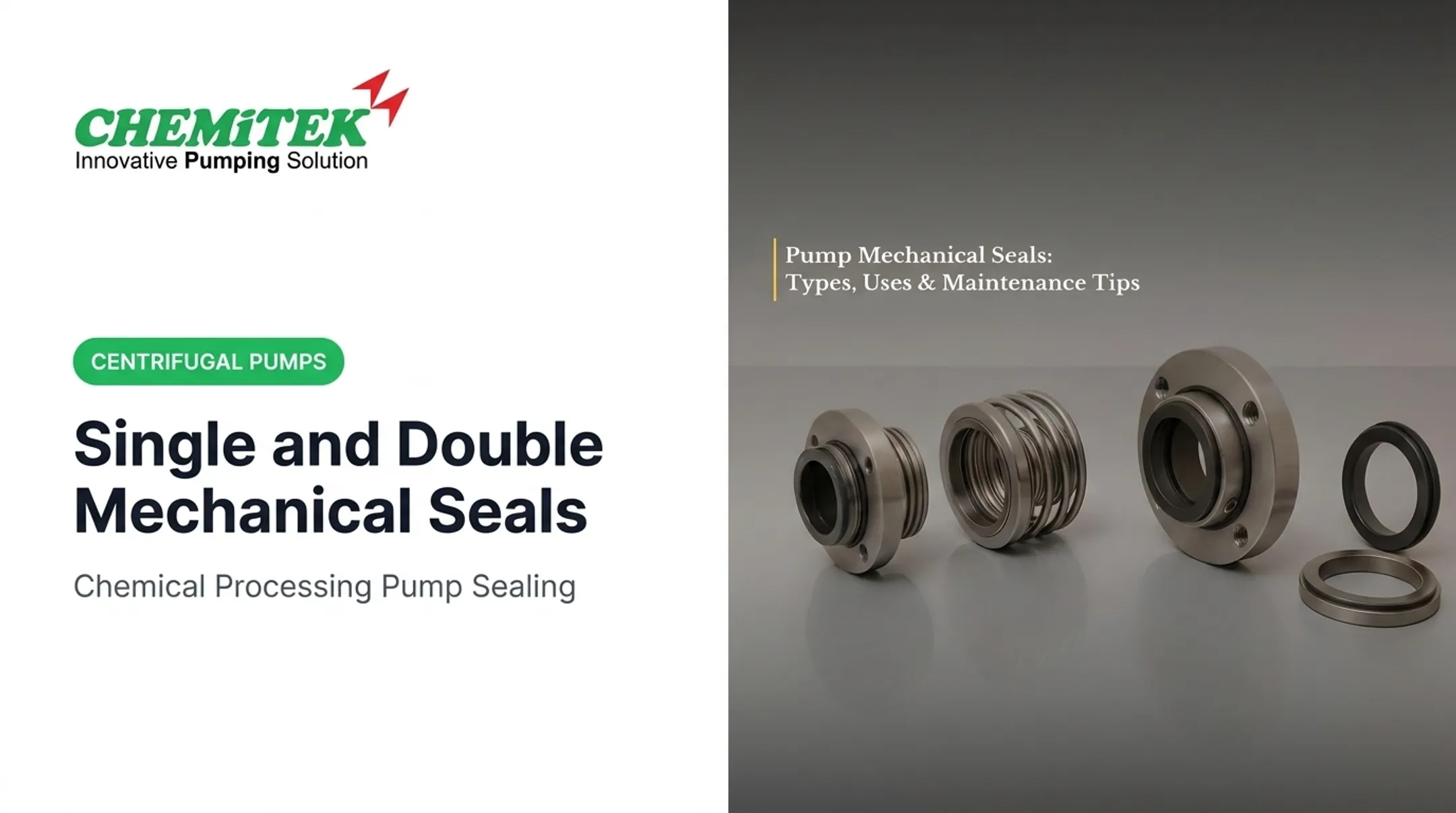
- Mechanical seals: Provide low leakage; life depends on fluid cleanliness and flush arrangement.
- Packing: Requires controlled leakage for cooling (one manufacturer cites 40-60 drops per minute for its design).
- Sealless/magnetic drive: Removes the shaft seal; dry-run tolerance depends on configuration.
Grundfos notes silicate and phosphate additives can crystallize in the seal gap and wear carbon faces; WC/WC and SiC/SiC pairs self-clean better. Confirm O-ring, gasket, and seal-face compatibility with an authoritative chart for your formulation.
Temperature and Concentration Considerations
Temperature changes viscosity, density, vapor pressure, seal performance, and power. Rate the pump for the full operating and upset range.
Concentration is equally important. Dow says glycol degradation produces organic acids, lowering pH and driving corrosion. DOWFROST below roughly 25-30 vol% glycol may give inadequate inhibitor protection. Over-concentration raises pressure drop and cuts heat transfer.
Industrial Pump Design Options
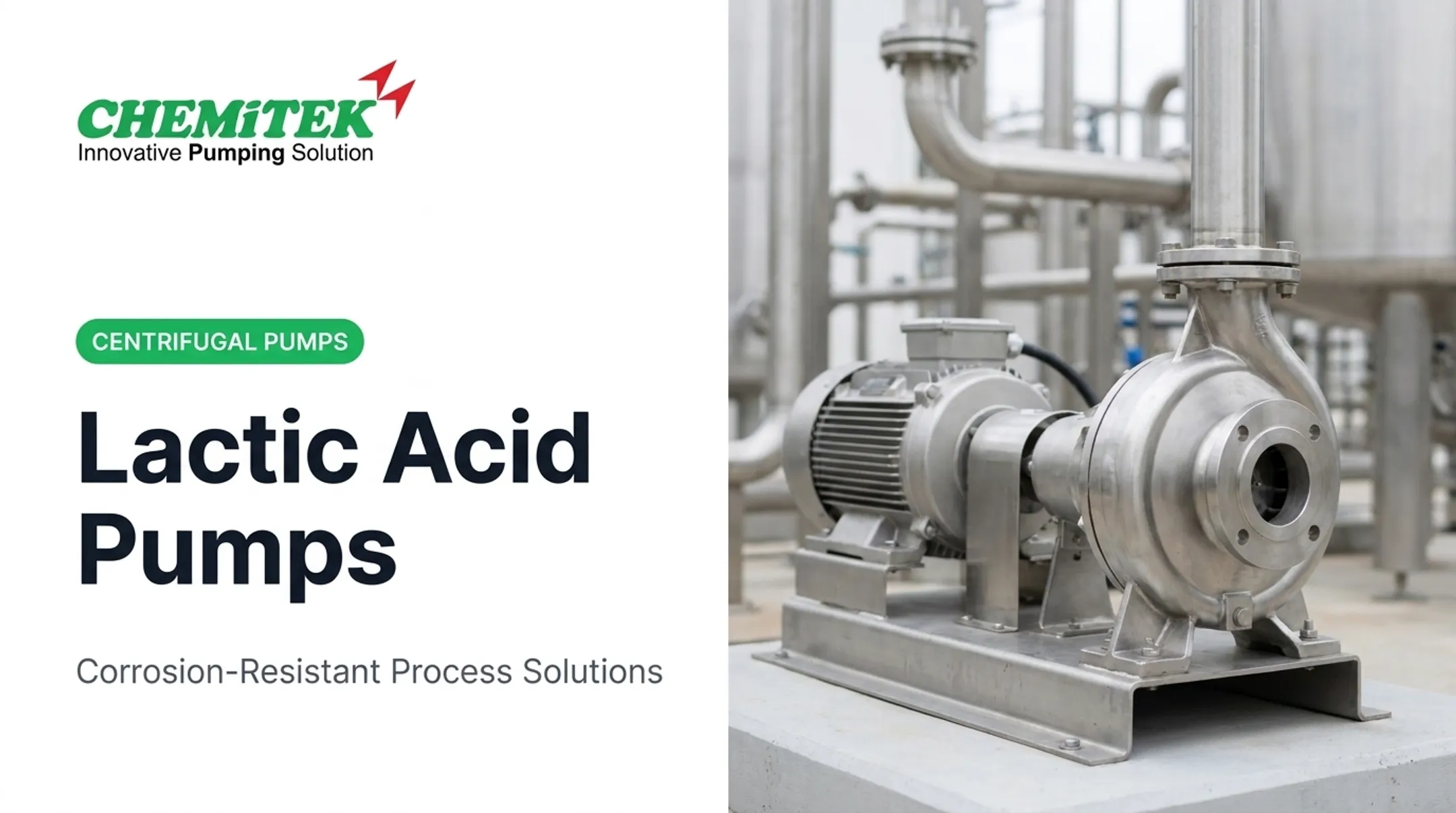
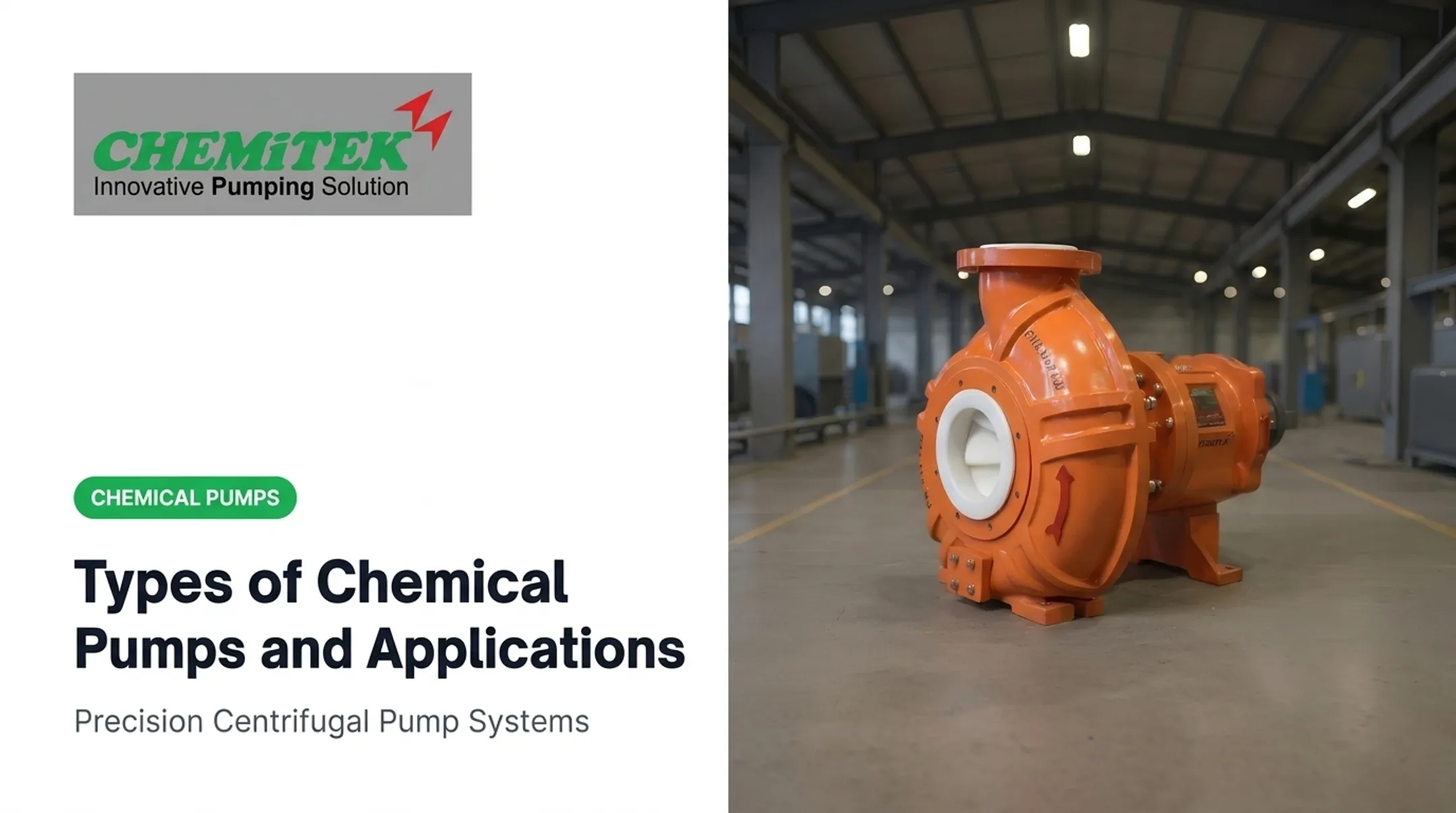
For engineered industrial duty, Chemitek builds custom-designed horizontal centrifugal process pumps with ANSI/ASME B73.1-compliant designs, heavy-duty power frames, investment-cast wetted parts, and polymer options. Its sealing chambers accept cartridge, double, and pressurized seals.
Confirm suitability for the duty before selection:
- Glycol chemistry and concentration
- Flow, head, temperature, and NPSH
- Wetted materials and seal arrangement
Not every pump is suited to glycol service.
Safety and Environmental Design
- Closed connections, drip trays, and secondary containment
- Leak detection, isolation valves, emergency shutdowns, and safe drains
- SDS-guided PPE, ventilation, handling, storage, and spill response
OSHA's HazCom standard (29 CFR 1910.1200) requires labels, SDSs, and training. EG has a 5,000 lb CERCLA reportable quantity under 40 CFR 302.6. Spent glycol needs a hazardous-waste determination at generation (40 CFR 262.11) before dilution or mixing.
Installation, Commissioning, and Maintenance
Installation and Priming
- Support piping independently so it imposes no load on the pump
- Install isolation valves, air-release points, and strainers where appropriate
- Provide priming for centrifugal pumps on suction lift; a priming pot retains liquid for a priming cycle
- Protect against dry running and air entrainment
Don't start the pump until the fluid path is open, the pump is filled or primed, and rotating equipment and electrical safeguards are checked. Dry running can seize rotating parts.
Commissioning and Performance Checks
Compare these readings against the approved specification and record baselines:
- Flow and discharge pressure
- Motor current, vibration, and noise
- Seal leakage and bearing temperature
Recheck alignment at operating temperature after the first run. ISO 10816-7 covers vibration evaluation for industrial pumps.
After filling, mixing, or maintenance, test concentration with a refractometer set to the correct EG or PG scale (ASTM D3321). The wrong scale gives wrong results. Watch for water or a different formulation entering the system.

Preventive Maintenance and Troubleshooting
Inspect routinely:
- Seals, bearings, couplings, and baseplate alignment
- Valves, strainers, and pipe supports
- Containment areas
Watch for cavitation, loss of prime, overheating, vibration, and falling flow. Recurring glycol loss calls for leak investigation, not repeated top-ups. Dow describes annual glycol and inhibitor analysis. Degradation or contamination may need specialist testing.
Conclusion: Selecting a Reliable Glycol Transfer Pump
Reliable glycol transfer comes from matching the pump to the real fluid and system, correcting water-based assumptions, verifying materials and seals, and protecting against cavitation, dry running, and excessive loads.
Before buying or replacing a pump, compile the full duty specification and get a manufacturer-reviewed selection.
Frequently Asked Questions
What type of pump is used for glycol?
It depends on glycol type, concentration, flow, head, viscosity, suction conditions, and leakage needs. Centrifugal and positive-displacement pumps are both used; neither is universal.
Is glycol harder to pump than water?
Often, yes. Higher viscosity and density at lower temperatures or higher concentrations raise friction losses and power demand, and require pump curve corrections.
What is a transfer pump?
A transfer pump moves liquid between tanks, drums, vessels, or process systems. It differs from a circulation pump, which keeps fluid moving in a loop, and a dosing pump, which meters precise volumes.
How do I size a glycol transfer pump?
Define flow, total dynamic head, concentration, viscosity, temperature, specific gravity, NPSH, and suction conditions. Then apply the manufacturer's corrected pump data.
Does glycol concentration affect pump performance?
Yes. Concentration changes viscosity, density, pressure drop, heat transfer, and motor load, which shifts the pump's operating point.
What materials are compatible with glycol?
Compatibility varies by glycol type, additives, concentration, temperature, and component material. Check the glycol and pump manufacturers' data for casings, seals, gaskets, and elastomers.