
The wrong wetted material can cause corrosion, cracking, leakage, and premature wear, even when the pump hits its flow rate. A 2025 Pumps & Systems article links improper material selection to early failure and process interruptions that can cost more than the pump itself.
This guide covers industrial chemical centrifugal pumps, particularly horizontal process pumps. It compares both constructions and shows how to match one to your duty.
Key Takeaways
- Metallic pumps suit high-temperature, high-pressure, and abrasive duty, once the alloy is confirmed compatible.
- Engineered polymer pumps resist many corrosive chemicals and cut rust-related maintenance, within material-specific limits.
- Neither construction wins universally; fluid, duty, and lifecycle cost decide.
- Supplier compatibility data and verified operating limits matter as much as material category.
Metallic vs Non-Metallic Chemical Pumps: Quick Comparison
Chemical compatibility and corrosion resistance
"Metal" is not one material. Stainless steel, duplex, Alloy 20, Hastelloy, and titanium behave very differently.
According to the British Stainless Steel Association, common 304 and 316 stainless should be treated as non-resistant to hydrochloric acid at any concentration or temperature. Austenitic grades can also crack in hot chloride service.
Polymers are just as specific. PVDF handles many acids and halogens, but Arkema's chart lists MEK, MIBK, ethyl acetate, and butylamine as not recommended. Polypropylene is unsuitable for strong oxidizing acids and halogens.
Temperature, pressure, and mechanical strength
Metallic construction generally leads on temperature, pressure, and strength. One published metallic ANSI pump is rated to 375 psig and, with a high-temperature option, 700°F. Typical PFA-lined and FRP pumps top out near 250 to 300°F and 200 to 250 psi.
Polymer performance depends on temperature, pressure, creep, and structural design. Creep-resistant does not mean creep-free. Separate normal operating conditions from short excursions, and check the complete pump rating rather than the resin's data sheet.
Abrasion, solids, and difficult fluids
Metallic wetted parts are often preferred for abrasive particles, slurries, and impact loading. Corrosion and abrasion can also occur together: abrasion strips protective oxide films and exposes fresh metal.
Some polymers handle solids. Check hardness, impeller design, particle size, concentration, and velocity before assuming they do.
Cost, weight, and lifecycle
| Factor | Metallic | Non-metallic |
|---|---|---|
| Weight | Heavier; stainless has a specific gravity near 7.9 | Lighter; PP is about 0.94, PVDF about 1.75 |
| Purchase price | Varies by alloy; exotic alloys cost more | Not always lower; depends on polymer and design |
| Maintenance | Corrosion and seal damage if alloy mismatched | Less rust-related upkeep, but cracking and swelling need controls |

Lined pumps keep metal backing, so polymer does not automatically mean a lighter assembly.
Maintenance, containment, and safety
An incompatible alloy corrodes, damages seals, and leaks. Inspection and the correct sealing arrangement matter in both families.
Corrosion-resistant polymer parts can support containment and lower maintenance. But cracking, deformation, chemical swelling, installation damage, and heat exposure still need controls.
What Are Metallic and Non-Metallic Chemical Pumps?
What is a metallic chemical pump?
A metallic chemical pump uses metal alloys in its wetted or structural parts, chosen for the duty. Common options include 316 stainless, duplex, Alloy 20, Hastelloy, nickel, and titanium.
Benefits: mechanical strength, pressure and temperature capability, abrasion resistance. Limits: weight, alloy-specific corrosion, and the need to match the metal to the exact fluid and concentration.
Use cases of metallic chemical pumps
- High-temperature transfer
- Elevated-pressure systems
- Abrasive fluids and slurries
- Outdoor, impact-prone installations
- Processes needing grounding for static control
Verify each against the pump design and your site's safety requirements. Metal is not automatically required for grounding.
What is a non-metallic chemical pump?
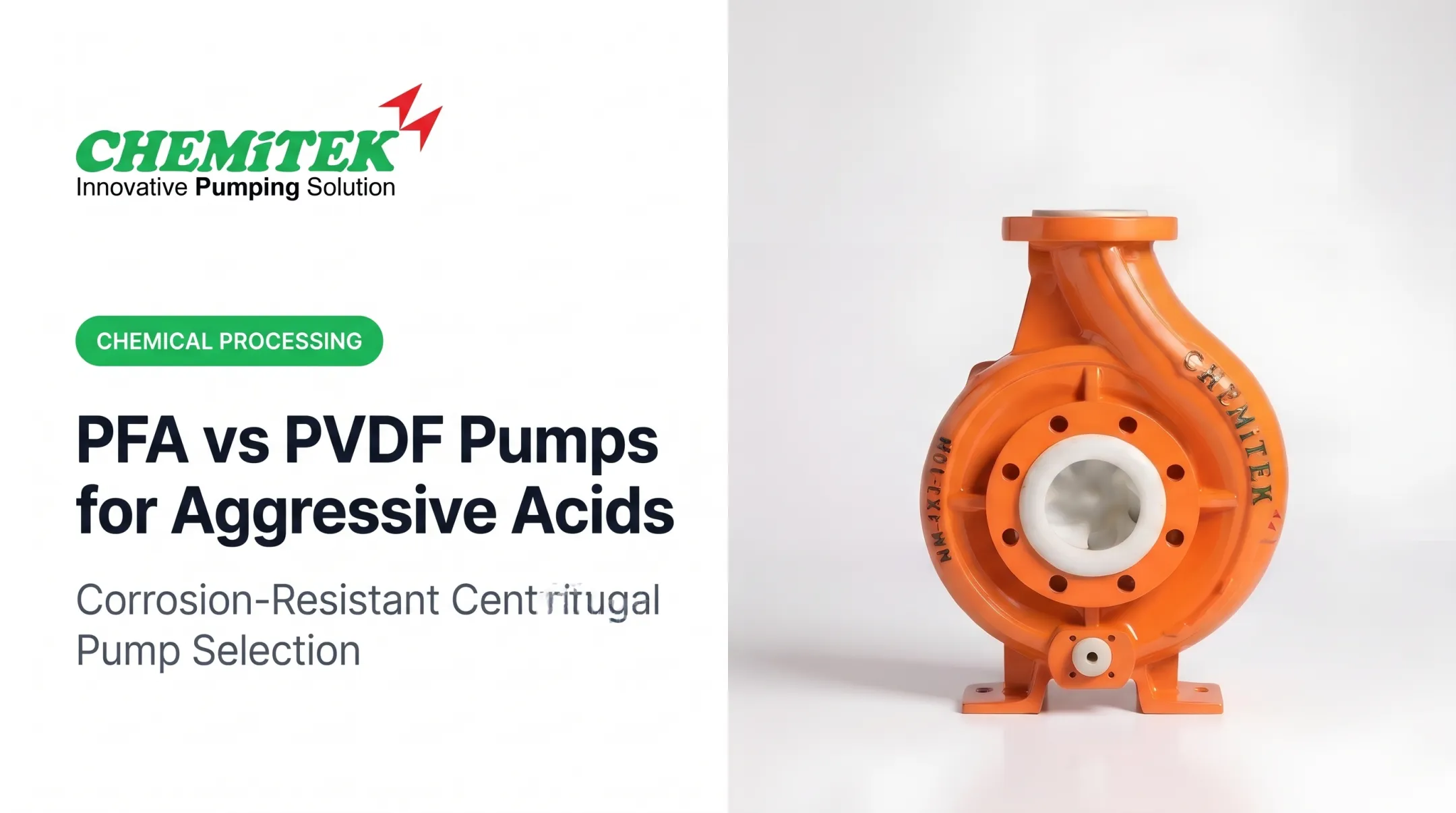
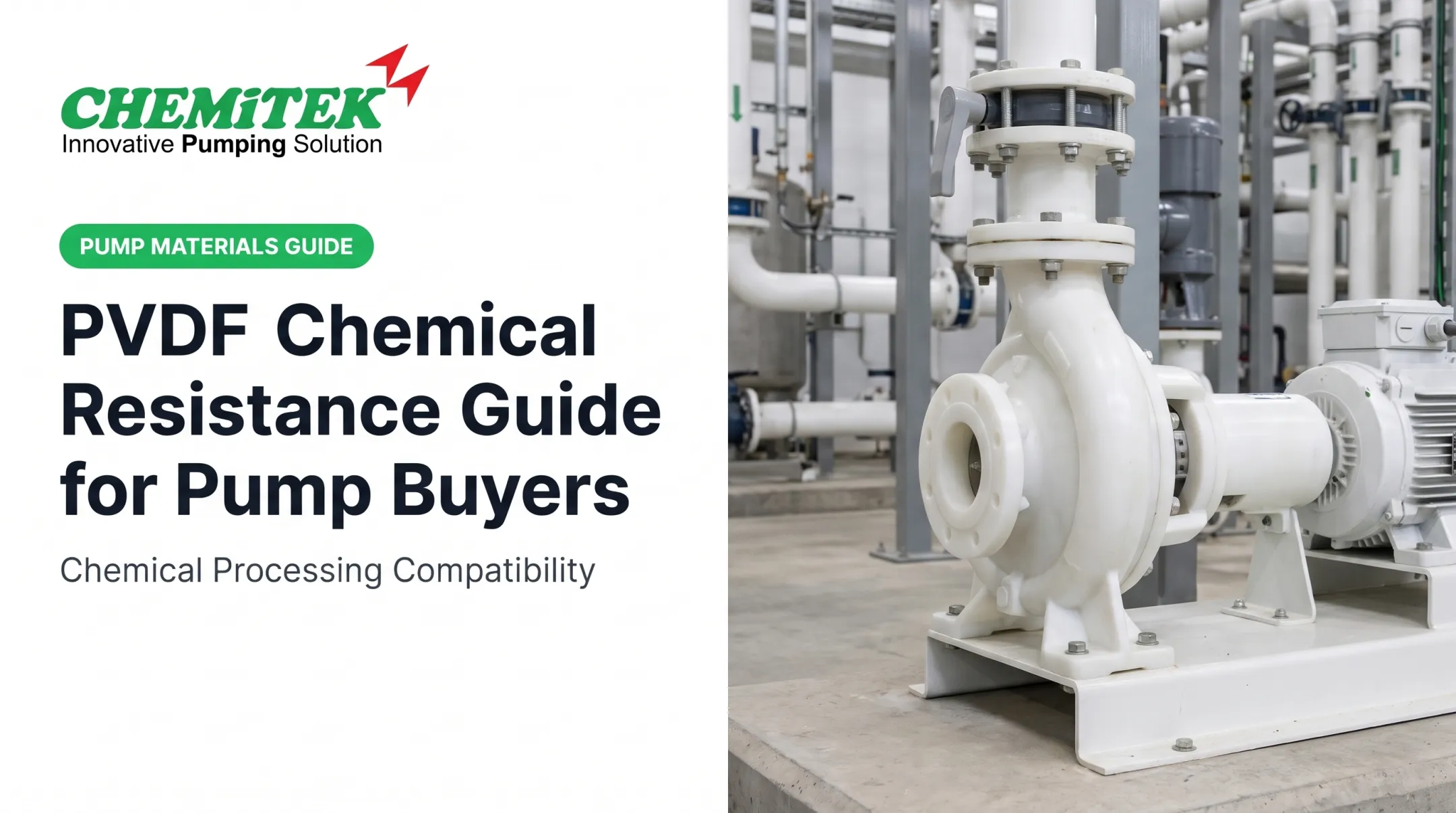
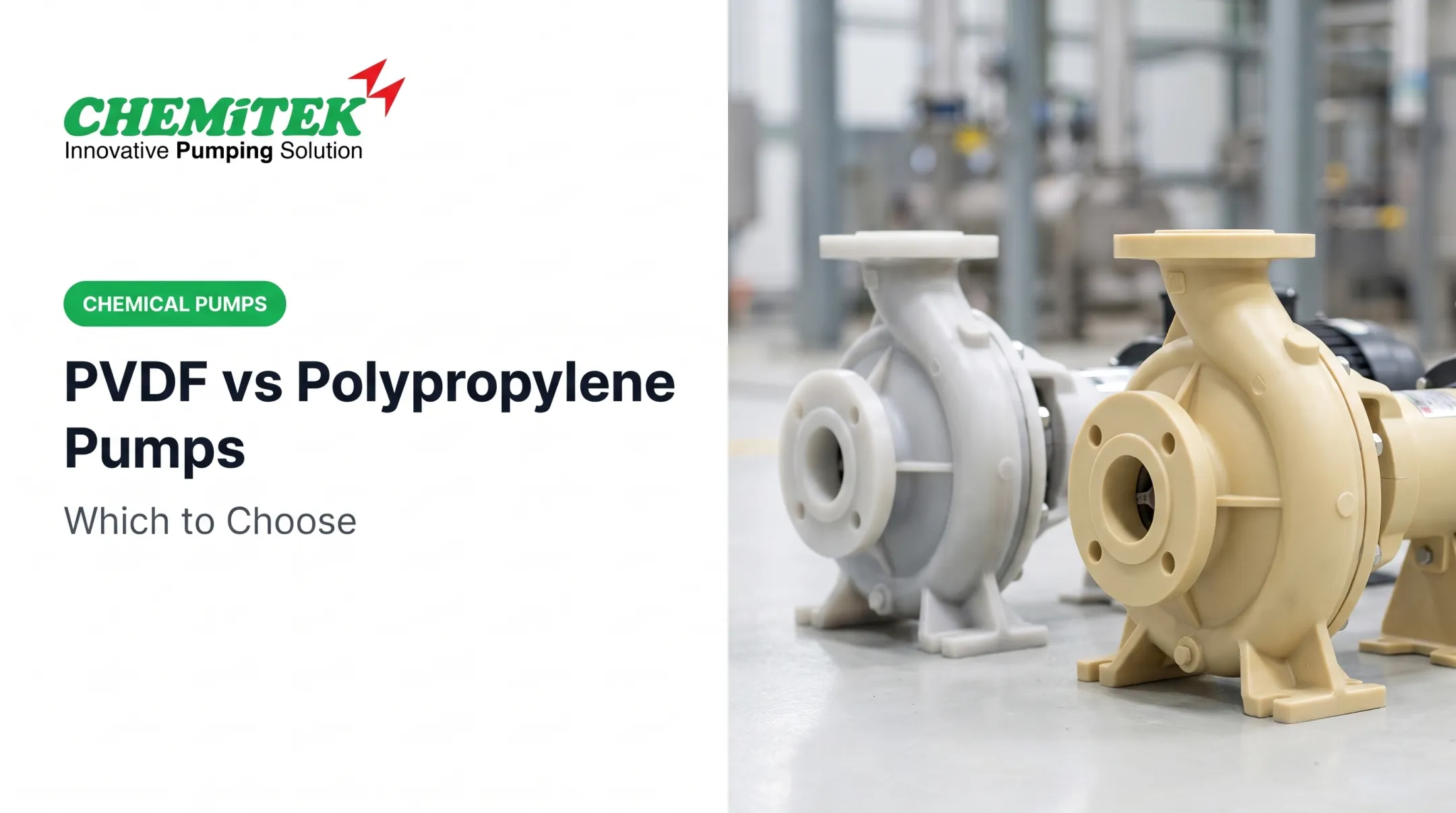
A non-metallic chemical pump uses engineered polymers or composites in its wetted components. It is not a low-duty or consumer plastic pump. Designs include solid polymer, polymer-lined metal, and fiberglass-reinforced plastic.
Benefits: resistance to selected corrosive chemicals, low weight, less rust, possible contamination advantages. Limits: temperature, pressure, creep, impact, UV exposure, and certain solvents or oxidizers.
Use cases of non-metallic chemical pumps
Non-metallic pumps serve these services where the polymer is compatible:
- Chemical transfer and fluorochemical processing
- Water and wastewater treatment
- Fertilizer, including fluosilicic and sulfuric acids
- Textile and dye operations
- Electroplating and steel pickling
- Specialty chemicals
A manufacturer-authored Pumps & Systems reprint describes a glass-products plant pumping hydrofluoric acid and a powder slurry. Metallic pumps, then fiberglass-reinforced polyester pumps, kept failing from impeller erosion.
Moving all wetted parts to PVDF resolved the failures. Later casings used polypropylene while the PVDF impeller stayed, and the article reports a lower initial cost.

Metallic vs Non-Metallic Chemical Pumps: What Is Better?
The better pump is the one that stays compatible and mechanically reliable across the full operating cycle. Work through these checks instead of defaulting to the strongest-looking or cheapest option:
- Fluid: chemical name, concentration, pH, temperature, contaminants, vapor pressure, viscosity, solids, and any composition change during batching or cleaning.
- Hydraulic and mechanical duty: flow, total head, suction conditions, NPSH margin, pressure, startup, duty cycle, temperature excursions, and operating hours. The Hydraulic Institute notes that reliability needs NPSH margin and operation in the preferred region, not just a material choice.
- Abrasion and site: particle size, concentration, impact, UV, freezing, vibration, alignment, and maintenance access.
- Total cost of ownership: energy, spares, seal replacement, inspection, downtime, cleanup, and the consequence of a failed pump.

Situational recommendations
- Favor a qualified non-metallic pump when corrosion is the main challenge and temperature, pressure, and loads sit within its limits.
- Favor a qualified metallic pump when temperature, pressure, abrasion, impact, or structural loads dominate.
- Bring in application engineering when the fluid is both severely corrosive and abrasive.

Chemitek builds custom-designed horizontal centrifugal process pumps in both families. Its metallic range covers SS316, SS304, and super alloys, and its non-metallic range covers PVDF, PFA, and FEP. Confirm ANSI/ASME B73.1 compliance for the specific model you are considering.
Send Chemitek your fluid and duty data for a technical pump-selection review.
Real-World Examples
Chemitek's Aarti Industries case involved corrosive, high-temperature chemical manufacturing where other pumps failed. Chemitek engineered pumps with stronger corrosion resistance and high-temperature capability. Client testimonials point the same way:
- AMNS India reports drastically reduced spares consumption after adopting a Chemitek non-metallic centrifugal pump.
- Aether Industries reports significantly lower maintenance downtime and costs after switching to Chemitek's non-metallic pumps in corrosive service.
These are client-reported results without published figures. The takeaway is situational: where corrosion drives failures, a correctly matched polymer pump can cut upkeep. Share a comparable duty with Chemitek to request an application review.
Conclusion
Metallic and non-metallic chemical pumps each have a proper operating window. Let chemical compatibility, temperature, pressure, abrasion, hydraulics, containment, and lifecycle cost drive the choice, not a blanket preference.
The right match delivers safer handling, fewer material-related failures, lower maintenance, and steadier production. Check compatibility charts and manufacturer engineering data before you buy.
Frequently Asked Questions
Which type of pump is better?
The better pump is the one matched to the fluid, flow, head, temperature, pressure, solids, and containment needs. Neither metallic nor non-metallic construction wins universally.
What is the most reliable type of pump?
Reliability comes from correct material compatibility, hydraulic sizing, installation, sealing, maintenance, and operating discipline. Material category alone does not decide it.
What is the best pump for chemicals?
Review chemical compatibility, concentration, temperature, pressure, corrosion, abrasion, and leakage risk first. Then choose a centrifugal chemical pump built for that duty.
Is an aluminum water pump better than plastic?
A water-pump comparison does not answer chemical-pump selection. Check aluminum and engineered polymer compatibility against your specific chemical, temperature, pressure, and solids.
What is the best material for an impeller?
It depends on the chemical, temperature, solids, abrasion, speed, and hydraulic performance. Evaluate the impeller with the casing, shaft, seals, and other wetted parts. For hydrofluoric acid service, a PVDF impeller is often paired with a polypropylene casing.