
Downtime is expensive. ABB's 2025 survey found that 83% of industrial decision-makers agree unplanned downtime costs at least $10,000 per hour. That is a broad industrial figure, not a pump-specific one, but it shows what a bad material call can put at risk.
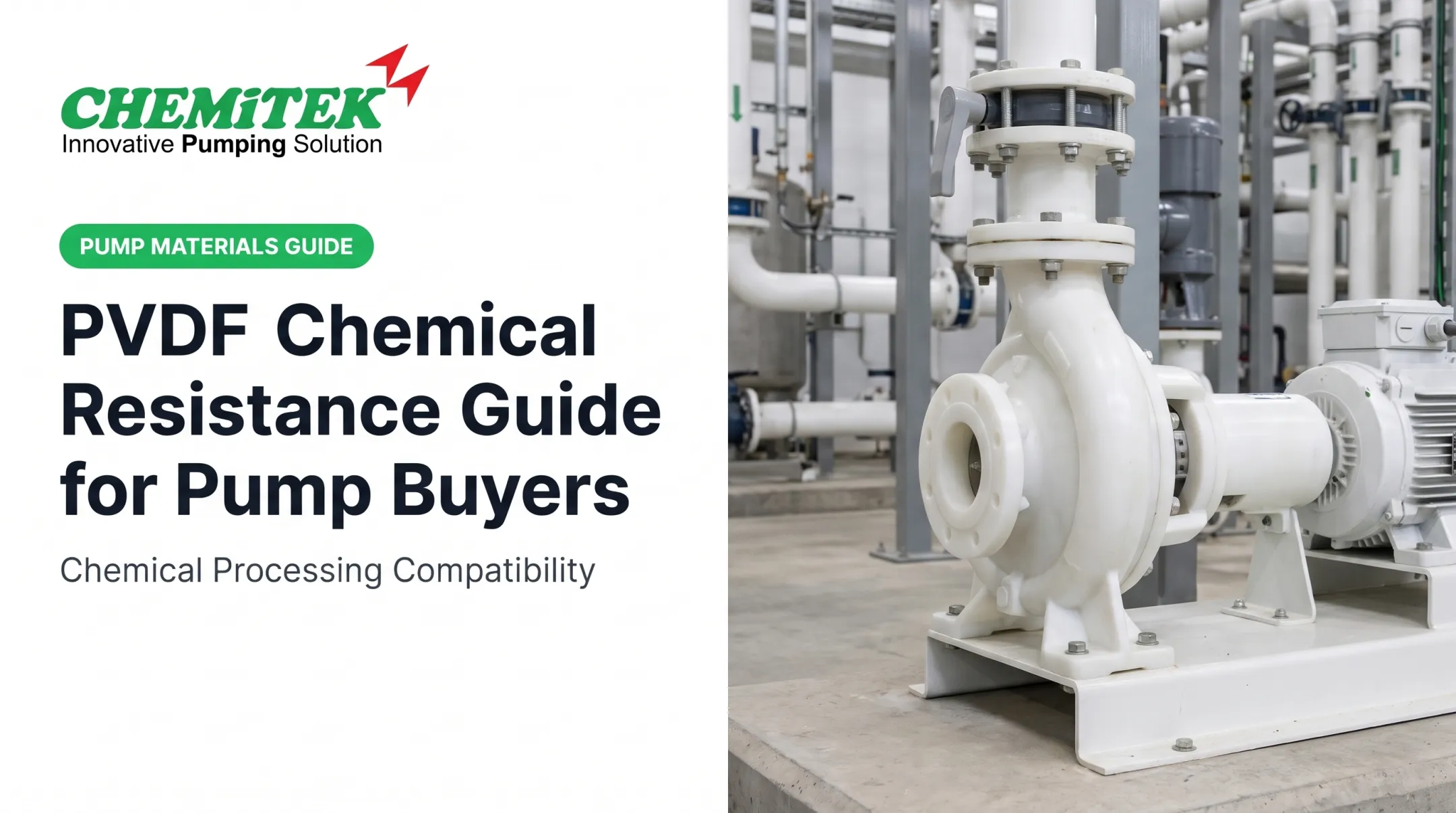
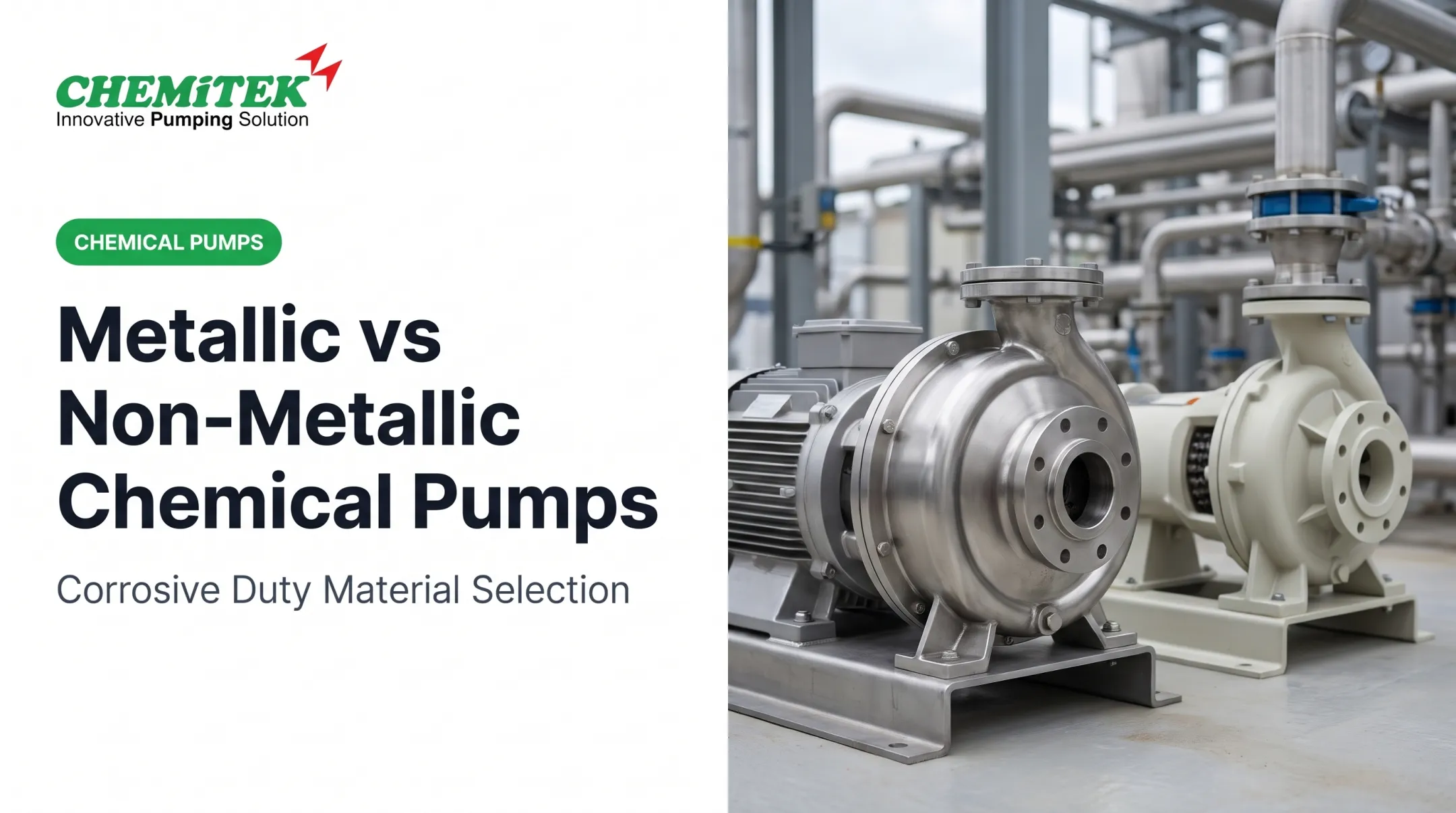
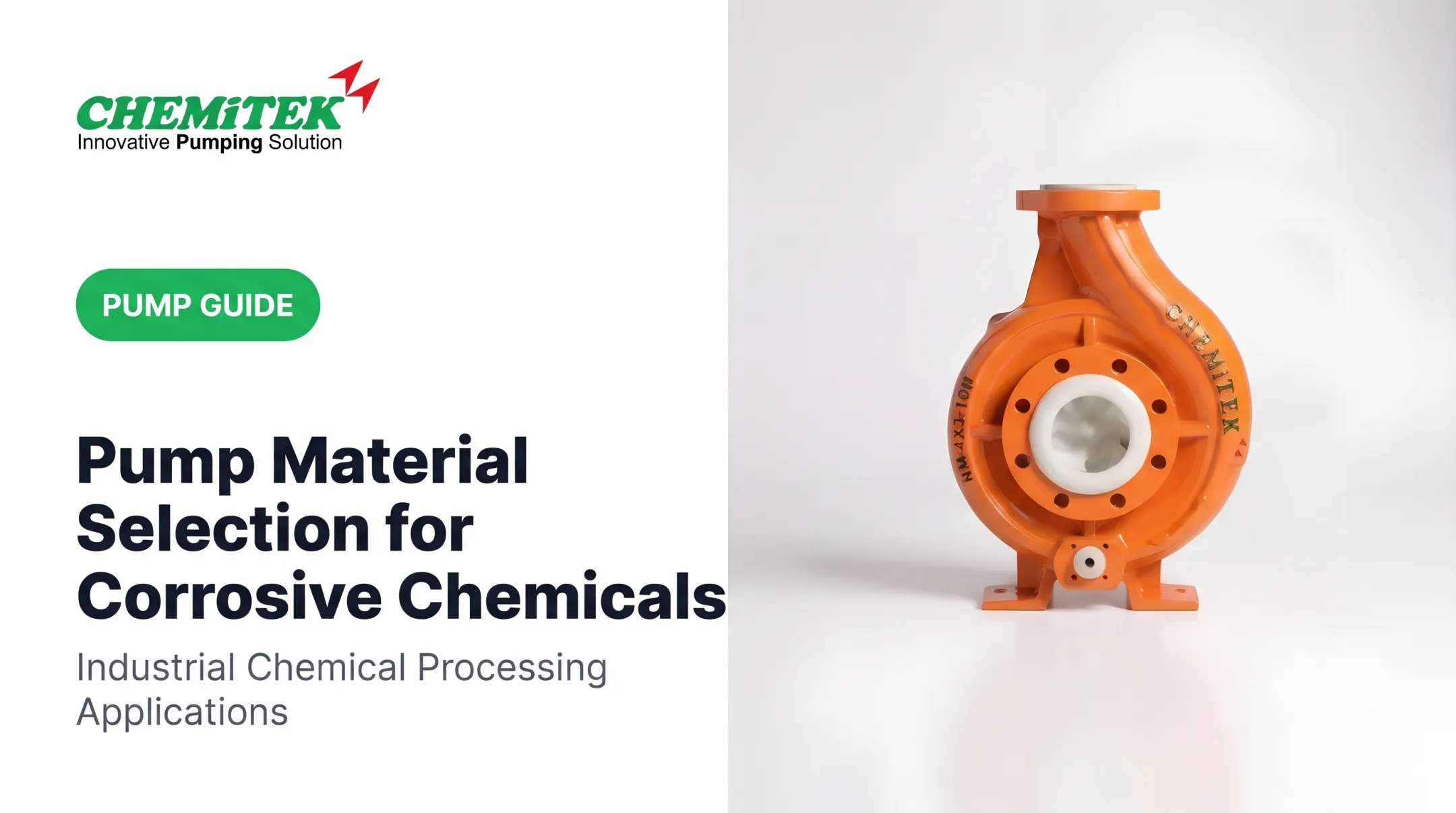
This article compares PVDF and PP for centrifugal process pumps. It covers cost, chemical resistance, temperature, strength, and the checks to run before you buy.
Key Takeaways
- PVDF suits harsher chemistry, higher temperatures, and purity needs; PP suits compatible, moderate-duty service at lower cost.
- Neither material wins everywhere. The fluid, concentration, and temperature decide.
- A compatible casing is not enough: seals, O-rings, and impellers must match too.
- Compare lifecycle cost, not purchase price alone.
PVDF vs Polypropylene Pumps: Quick Comparison
| Factor | PVDF | Polypropylene |
|---|---|---|
| Cost | Higher; justified when the duty needs its capability | Lower; suits moderate duty |
| Chemical resistance | Broad, including strong oxidizers and concentrated acids | Good for many aqueous acids, alkalis, salts |
| Temperature | Higher ratings | Lower ratings, faster derating |
| Strength | Stiffer, tougher | Light, adequate, more prone to creep |
| Typical uses | Pickling, fluorochemicals, hot acids | Water treatment, wastewater treatment, dyeing, dilute acids |
Cost
PVDF costs more. That premium makes sense only when the duty needs its chemical or thermal capability. PP is the economical choice for suitable moderate services.
That lower price can still cost more over time. If a PP casing fails early, replacement parts and downtime erase the savings.
Cost also depends on the application. Vanton documented cutting initial pump costs by switching casings and covers from PVDF to PP while keeping a fluoropolymer impeller, with performance unchanged. No universal price ratio exists.
Chemical resistance
PVDF generally resists more aggressive media. In Walchem's ambient-temperature chart, PVDF is rated excellent for:
- 98% sulfuric acid
- 70% nitric acid
- 30% hydrofluoric acid
- 13% sodium hypochlorite
Glass-fiber-reinforced PP is not recommended for any of them.
The reverse also happens. The same chart rates PVDF not recommended for 50% sodium hydroxide, while glass-fiber-reinforced PP is excellent. PP also needs caution with strong oxidizers, halogenated and aromatic hydrocarbons, and some ketones. Always check the exact chemical, concentration, and temperature.

Temperature capability
Manufacturer ratings for assembled pumps show the gap:
| Pump | PP max | PVDF max |
|---|---|---|
| Finish Thompson DB | 180°F (82°C) | 220°F (104°C) |
| Tapflo CTP | 158°F (70°C) | 194°F (90°C) |
| GemmeCotti HTM | 140°F (60°C) | 176°F (80°C) |
Pressure derates with heat too. Tapflo rates both materials at PN6 at 68°F (20°C), but PP drops to PN2 at 158°F and PVDF to PN2 at 194°F. These are model-specific numbers. Get the derating curve for your pump.

Mechanical strength and pressure
Stock-material datasheets from Röchling show PVDF with higher tensile yield (above 50 MPa vs. above 30 MPa) and modulus (above 2,100 MPa vs. above 1,500 MPa). PP is lighter and adequate for appropriate duties, but more sensitive to heat, creep, pipe strain, and excess pressure.

Typical applications
- PVDF: acid scrubbing, steel pickling, specialty chemicals, fluorochemicals, hotter services
- PP: water treatment, wastewater treatment plants, general chemical transfer, textile and dye operations, dilute acids
What Are PVDF and Polypropylene Pumps?
What is PVDF?
Polyvinylidene fluoride is a melt-processable fluoropolymer thermoplastic with alternating -CH2- and -CF2- groups. It is a plastic, not a metal, and it outperforms commodity polymers in harsh chemical service. Resin maker Arkema cites low permeability and use as a contact surface for corrosive fluids, with high-purity grades for semiconductor and pharmaceutical work.
Key limits include:
- Higher purchase cost
- Chemical exceptions, including strong bases and some amines, ketones, and solvents
- Pressure and temperature derating
Chemitek builds PVDF pumps from Arkema (USA) and Daikin (Japan) grades.
Use cases of PVDF
PVDF fits aggressive acids, halogens, oxidizing chemicals, pickling, and fluorochemical service, where polypropylene does not offer enough chemical or thermal margin. Vanton lists resistance to chlorine and bromine and describes a bromine application requiring PVDF wetted parts. Chemitek also supplies PVDF pumps to fertilizer complexes where continuous acid dosing would quickly destroy even duplex steels.
What is polypropylene?
Polypropylene is a lightweight thermoplastic made by polymerizing propylene. Its practical advantages include:
- Broad resistance to aqueous acids and alkalis keeps many chemical duties simple
- Low weight eases handling and installation
- Lower material cost helps procurement
Limits include reduced capability at elevated temperature, poor fit with many oxidizers and solvents, and creep under sustained load. Support, alignment, and pressure selection all matter in design.
Use cases of polypropylene
PP fits water treatment, industrial wastewater plants, dilute chemical transfer, and dyeing. LyondellBasell rates 10% nitric acid satisfactory at 70°F and 120°F, while concentrated nitric acid is not recommended.
PVDF vs Polypropylene: What Is Better for Your Application?
Define the duty point first
Before comparing materials, write down:
- Chemical name and concentration
- Temperature range
- Viscosity, specific gravity, and solids
- Flow, total head, and suction conditions
- Operating hours, batch or continuous
Evaluate the whole wetted package
The casing is one part. Check the impeller, shaft sleeve, backplate, mechanical seal and faces, gaskets, O-rings, and any flush fluid.
Tapflo offers O-rings in EPDM, FKM, and FEP/FKM; these materials are not interchangeable and carry different chemical approvals. Finish Thompson warns that an unsuitable O-ring can swell and become a leak source.
Check hydraulics and installation
- NPSH: Finish Thompson recommends at least 2 ft (61 cm) above required NPSH on its DB models.
- Dry running: Some bushing options cannot run dry without damage.
- Pipe strain: Support piping independently so the casing carries no load.
- Solids and abrasion: Confirm limits with the manufacturer. PVDF is generally tougher, but no standard head-to-head abrasion benchmark exists.

Situational recommendations
- Choose PP when fluid and temperature sit within its verified range and economy matters.
- Choose PVDF when you need chemical or thermal margin, purity, durability, or when failure is costly.
Use a current chemical chart, the safety data sheet, and manufacturer confirmation. Chemitek's application engineers can help match material and pump design to the duty, including custom non-metallic centrifugal requirements.
Real-World Examples and Case Studies
PVDF: acid scrubber circulation
Kaneka needed to circulate 1.5% HCl in a scrubber. It used a pump with injection-molded PVDF wetted parts. Installed in July 2008, it reportedly ran continuously except for a scheduled three-day monthly shutdown, per Processing Magazine in 2013. Treat that as historical reported operation, not a guarantee or a quantified savings figure.
Steel pickling at Chemitek
Chemitek received its first major order in 2012 for a PVDF pump for steel pickling. Pickling means aggressive acids, the kind of duty where PVDF's corrosion margin matters. Public detail on that install's configuration, chemistry, and outcomes is limited.
PP: caustic transfer
A Tennessee water-treatment plant uses a PP centrifugal pump for 25% sodium hydroxide, with PP casing, cover, and impeller. WaterWorld reported it running trouble-free in 2016. Uptime and savings figures were not published, but the case shows PP is enough when conditions are compatible.
EMD Electronics also chose PP centrifugal sump pumps for chemical wastewater with settled solids and reported lower maintenance costs, without publishing figures.

Takeaway
Use PVDF when the duty demands the extra margin. Use PP when verified conditions fit. Send Chemitek your fluid and duty details at info@chemitek.co.in for an application review.
Conclusion
There is no universal winner. PVDF is usually the stronger candidate for aggressive, hotter, purer, or higher-consequence services. PP is the right call for compatible, moderate-duty work where cost and simplicity matter.
Base the decision on verified chemical compatibility, the full wetted-part set, pump hydraulics, installation conditions, and lifecycle cost.
Frequently Asked Questions
What are the key differences between PVDF and polypropylene?
PVDF offers broader chemical resistance, higher temperature capability, and more strength, but at higher cost. PP is lighter and cheaper, suited to moderate duties. Exact grades and conditions matter.
Is PVDF a plastic?
Yes. PVDF is a fluoropolymer thermoplastic used in pump components and piping. Its fluorinated structure gives it an edge in many corrosive services.
Which is more chemically resistant, PVDF or polypropylene?
PVDF usually resists more aggressive or hot media, but not always. Walchem rates PVDF not recommended for 50% sodium hydroxide, where reinforced PP is excellent. Check a chart for your exact conditions.
Is polypropylene suitable for corrosive chemicals?
Often, yes. PP handles many acids, alkalis, salts, and aqueous chemicals within its verified range. It can fail with strong oxidizers, some solvents, or high temperatures.
What factors should I consider when choosing a pump?
Key factors include chemical and concentration, temperature, flow, head, viscosity, solids, and suction conditions. Also weigh pressure, seals and wetted parts, duty cycle, and lifecycle cost.
Can PVDF and PP pumps handle high temperatures?
PVDF generally handles more heat. Limits depend on pump design, pressure, grade, and continuous versus intermittent duty. Manufacturer examples run from 140°F to 220°F for assembled pumps.